Hang tags have no adhesive: their fastening depends entirely on the hook that connects them to the item. In industrial settings — steelworks, foundries, semi-finished goods warehouses, dispatch lines — the hook works under demanding conditions: temperature, vibration, mechanical handling and transit between operations. A poorly chosen hook causes the label to fall off, shift or become illegible before the item reaches its destination.
01What the hook is for and how it works
The hook acts as a bridge between the label and the item. The label has a reinforced hole — usually in the top corner or centred on the short edge — through which the hook passes; it is then closed, hooked or wound around a feature of the item: steel strapping, a bar, a sheet-metal edge, a grille or a slot in the storage structure.
When to use a hook versus other fastenings
The hook is the right fastening when the item does not have a clean, accessible flat surface for an adhesive, when the label needs to change position or be replaced during the process, or when identification must stay visible even as the item is moved, stacked or transported. Cable ties are an alternative when you want to pass through a hole rather than hook onto an edge; the weld stud is the alternative when the fastening must be permanent. The metal hook covers the middle ground: temporary but reliable, repositionable and suited to high-temperature environments.
Which sectors typically use it
The most common industrial use is in steelworks and rolling mills, where hooks identify coils, strapping, bars and profiles throughout the whole process, from casting to dispatch. They are also used in foundries, forging, heat treatments (galvanising, nitriding, painting), automotive, the textile sector for identifying bales and rolls, and general logistics when the product cannot take adhesive.
Hooks are sold by the box. Given seasonal demand variation, we recommend planning your order at least one month in advance — up to two months in some cases — to ensure immediate availability.
02Types of hook: shape, size and application
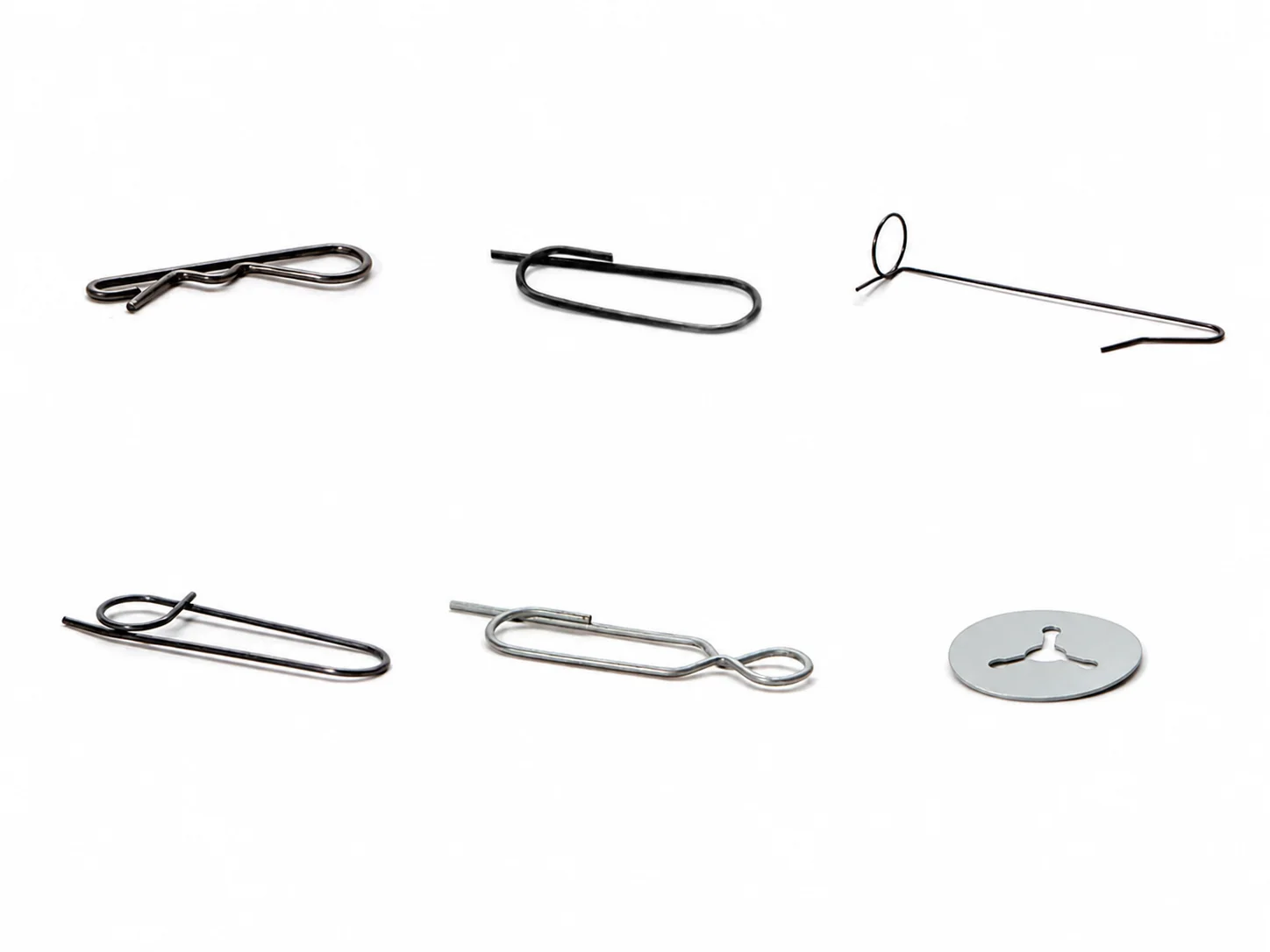
The available range covers six references — five hooks and one clip — differentiated by length, width, wire thickness and shape. Each one is suited to a different type of label or fastening point.
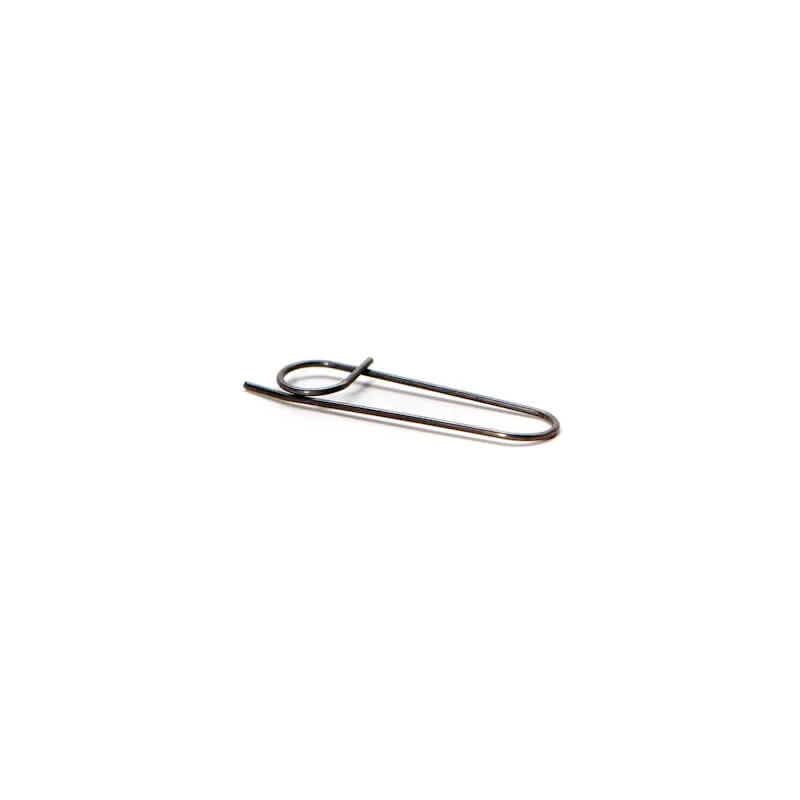
Short standard hooks (No. 0, No. 1, No. 8)
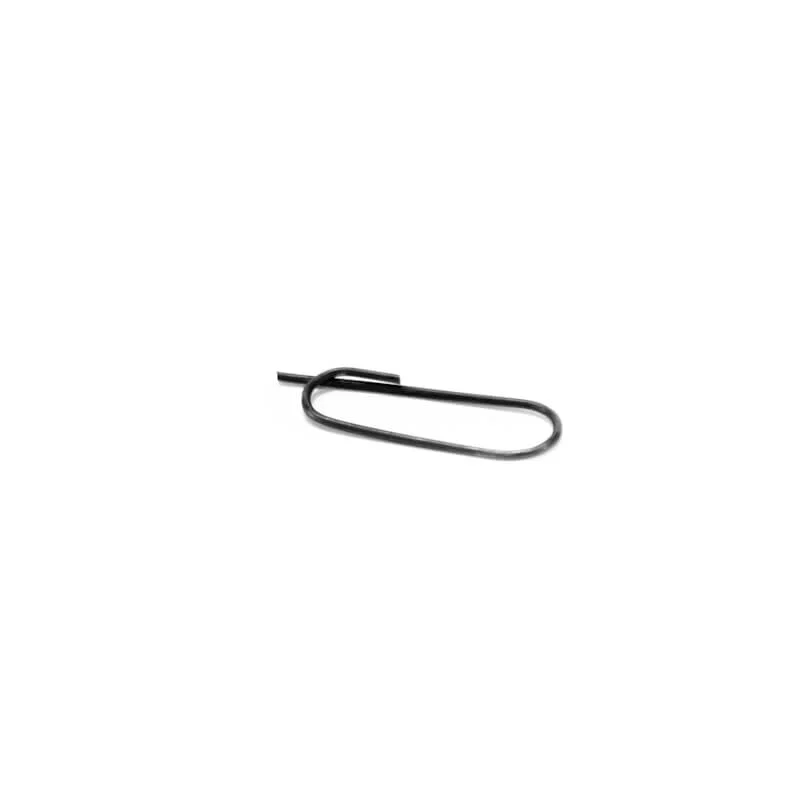
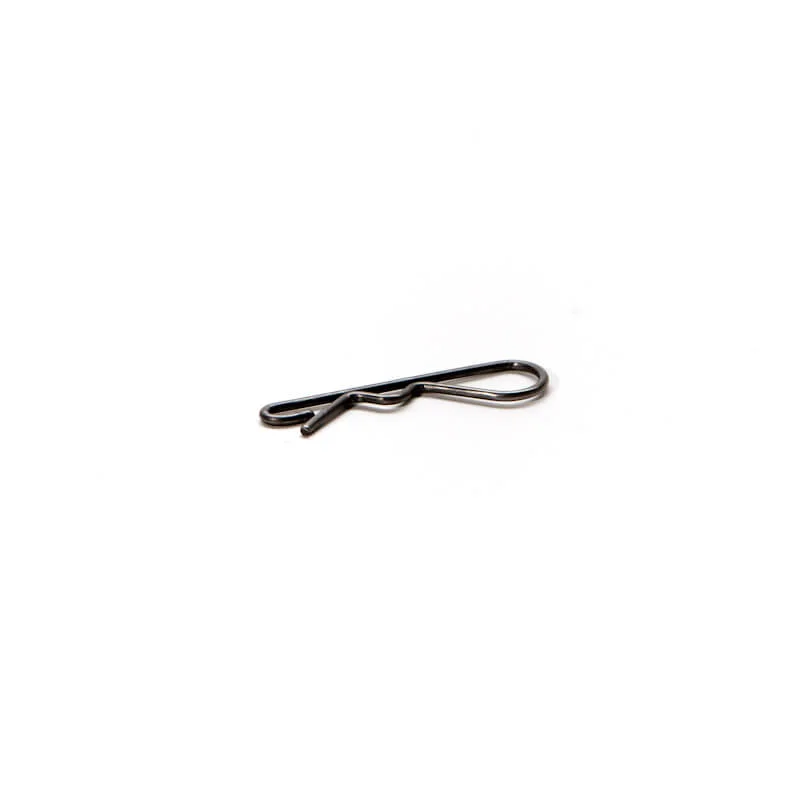
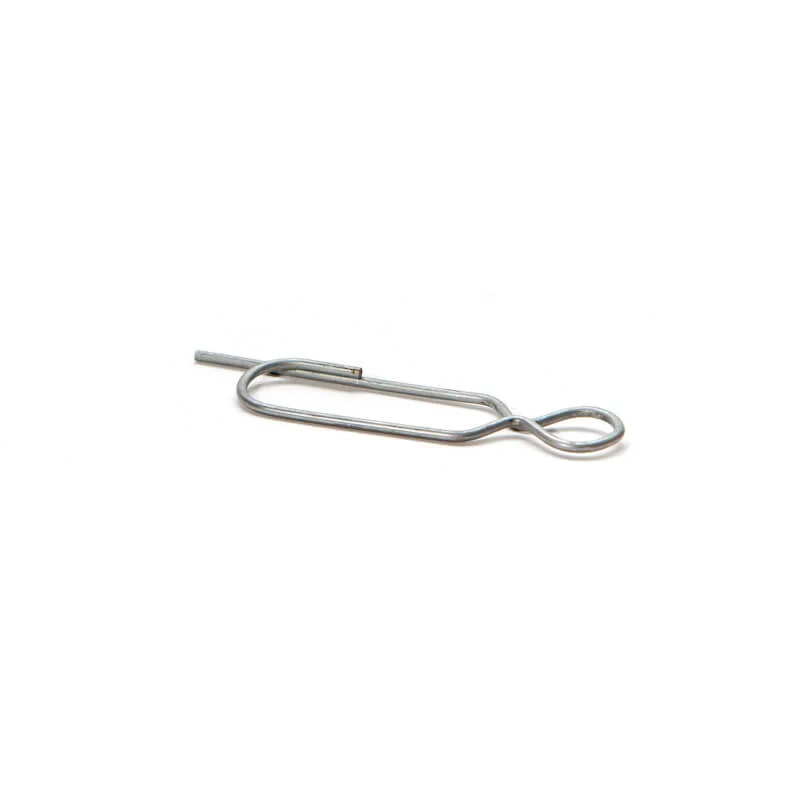
These are the most general-purpose. The Hook No. 1 (60 × 18 × 1.8 mm) is the reference model: medium length, wide enough to pass through the standard hole of an A6 or A5 label, with 1.8 mm wire that offers rigidity without making it hard to hook on. The Hook No. 0 (75 × 20 × 1 mm) is somewhat longer and wider than the No. 1, but with 1 mm wire — finer — which makes it suitable when the label hole is small or the hook has to pass through narrow slots without forcing the material. The Hook No. 8 (20 × 1.8 mm) is the most compact in the range: for small labels or applications where the space available at the fastening point is limited.
Large hooks (No. 6)
The Hook No. 6 (75 × 20 × 1.8 mm) combines the length of the No. 0 with the wire thickness of the No. 1 (1.8 mm), making it the most robust model in the standard range. It is suitable for large labels, high-grammage cardstock, or where the fastening is subject to vibration or frequent movement. It also comes in the largest box format available (60,000 units), making it the most economical per unit for high-volume production.
Long hook (No. 2)
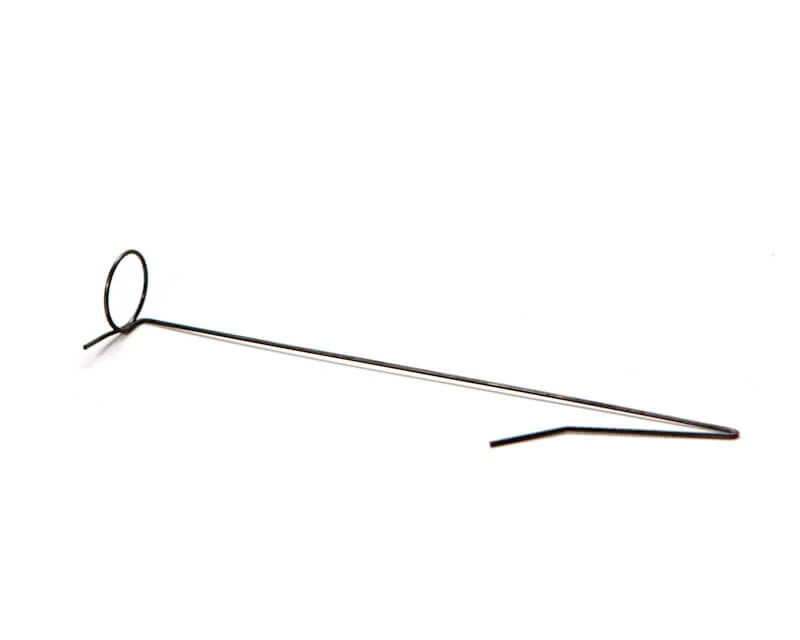
The Hook No. 2 comes in two lengths (30 × 220 mm and 30 × 290 mm) and answers a different need: reaching deep fastening points or hanging on bars and vertical structures where a short hook cannot reach. It is common in high-bay storage, identification of large-diameter coils, or when the label needs to hang freely at some distance from the item to make it easier to read.
Clip (Clip No. 8)
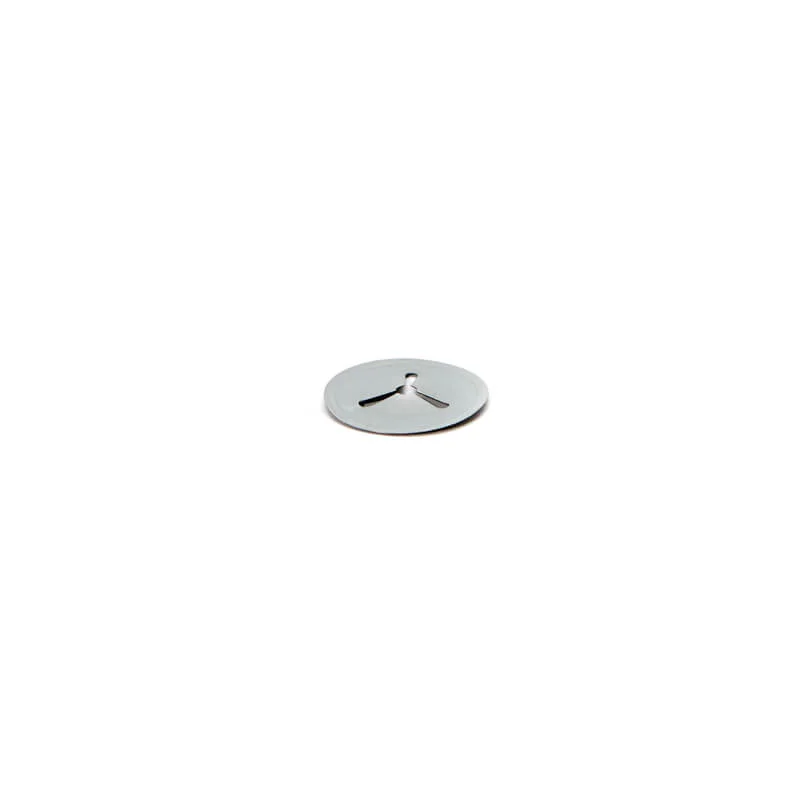
The Clip No. 8 (4.7 mm) is technically different from the rest: instead of passing through the label hole and hooking onto an edge, the clip grips the label material — or the sheet metal/bar itself — from the side. It is the solution when the fastening point is a grille, a mesh or a profile where a J-hook cannot close, or when you want a fastening with no hole in the label.
| Reference | Size | Box | Recommended use |
|---|---|---|---|
| Hook No. 1 | 60 × 18 × 1.8 mm | 25,000 units | Standard label, general industrial use |
| Hook No. 0 | 75 × 20 × 1 mm | 30,000 units | Small hole, narrow slots, lightweight label |
| Hook No. 8 | 20 × 1.8 mm | 10,000 units | Small label, limited fastening space |
| Hook No. 6 | 75 × 20 × 1.8 mm | 60,000 units | Large or heavy label, high production volume |
| Hook No. 2 | 30 × 220 mm / 30 × 290 mm | 30,000 units | Vertical bars, large-diameter coils, deep reach |
| Clip No. 8 | 4.7 mm | 30,000 units | Grilles, mesh, profiles where a J-hook cannot close |
03How to choose the right hook
The right choice depends on four variables: the size and weight of the label, the fastening point available on the item, the environmental conditions (temperature, humidity, chemical exposure) and the production volume.
By label size and weight
Standard industrial identification labels — A6, A5, custom cardstock or synthetic formats up to around 200 g/m² — work well with the No. 1, No. 0 and No. 6 models. For small labels or thin paper, the No. 8 reduces the risk of the hole tearing under the weight of the hook. For thick cardstock labels (300 g/m² or more) or in conditions of frequent movement, the No. 6 with 1.8 mm wire is the most stable option.
By the fastening point
A sheet-metal edge, strapping or a horizontal bar: any standard hook (No. 0, 1, 6, 8) will work. A vertical bar or a deep profile: the Hook No. 2 in the appropriate length (220 or 290 mm). A grille, a mesh or a profile with no free edge for a J-hook: the Clip No. 8. Before choosing the reference, it helps to identify exactly how the hook will close on the item.
By environment and temperature
All the hooks available are made of steel, which makes them suitable for the temperature ranges of the most common environments: steelworks, heat treatments, galvanising and painting lines. Uncoated steel can rust in environments with sustained humidity or exposure to chemical agents. If the application requires corrosion resistance — food industry, areas with frequent washing, marine environments — a specific finish or a stainless steel reference should be considered; in that case, please check availability directly.
⚠ Humid or chemically aggressive environments
Standard steel hooks can rust in environments with prolonged humidity, acid exposure or washing cycles. For those conditions, check whether a galvanised finish or a stainless steel reference is needed before placing the order.
By production volume
The box format affects the cost per unit. For very high volumes and large labels, the Hook No. 6 (60,000 units/box) is the most economical per unit. For medium volumes, or when several references are used in parallel, the 25,000–30,000-unit formats (No. 1, No. 0, No. 2, Clip No. 8) offer better stock management. The No. 8 in a box of 10,000 units is suitable when volume is low or the reference is complementary.
“The right hook is not the biggest or the strongest: it is the one that fits the label hole, reaches the item’s fastening point and withstands the environmental conditions without adding difficulty to the process.”
Need hooks for your industrial identification process, or not sure which reference is the best fit?
Ask about a referenceSummary
For most standard industrial applications — an A6 or A5 label on cardstock, fastened to a sheet-metal edge or strapping — the Hook No. 1 or No. 6 covers 80% of cases. The No. 0 is the alternative when the wire needs to be finer; the No. 8, when space is limited; the No. 2 when reach is needed. The Clip No. 8 solves fastening points where a J-hook cannot close.
All models are supplied in high-volume boxes (10,000 to 60,000 units). If you need smaller quantities or advice on the most suitable reference, get in touch: we can also help you combine hooks with hang tags in paper, cardstock or synthetic material.