Materials for self-adhesive labels
Coated paper labels: the best quality-price ratio for indoor use
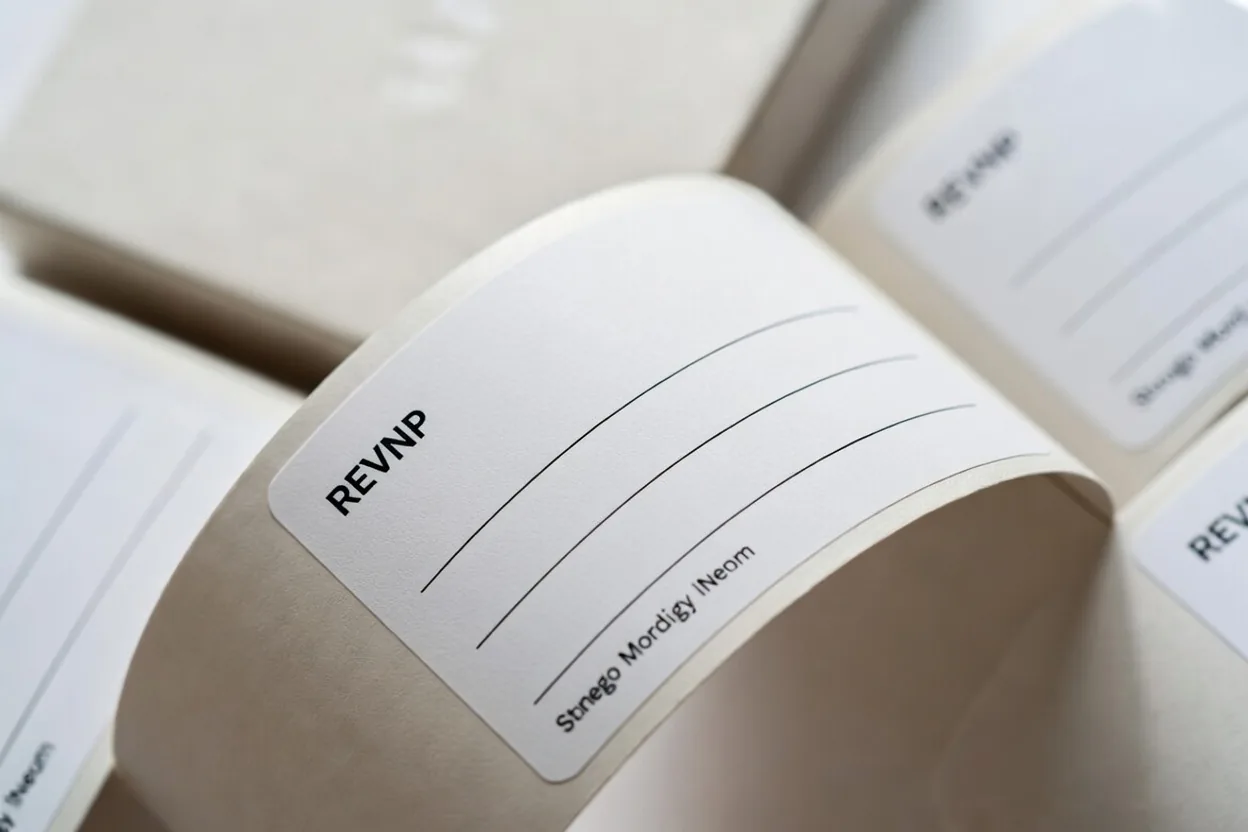
When the label does not need to withstand water, heat or chemicals — when it is on an indoor product, a warehouse box or a shop package — coated paper is the right choice: economical and the easiest to print. Matt or gloss, in roll form, compatible with most thermal transfer and inkjet printers.
Temperature
-10 °C to +60 °C
Moisture resist.
Low
Ribbon
Wax / Wax-resin
Finishes
Matt / Gloss / Semi-matt
Common applications
- Commercial and indoor product labelling.
- Short-cycle logistics in dry environments.
- Pharma: secondary labelling and dispensing.
- Standard food labelling with no washing or extreme cold.
Compatible adhesives
Permanent acrylic (standard for logistics and indoor use), removable (temporary labelling and pricing) and rubber hot-melt (high immediate tack on cardboard and recycled materials).
Material variants
- Matt: optimal for barcodes and technical text with no glare.
- Gloss: greater visual contrast for product and retail labelling.
- Semi-matt: balance between presentation and readability. Common in pharma.
- High resistance: surface treatment for greater durability against rubbing and handling.
Need more resistance?
For environments with moisture, outdoor exposure or chemical requirements, polypropylene is the suitable alternative.
See polypropylene labels →Selection criteria
When to choose coated paper and when not to
Coated paper offers the lowest cost per label in dry indoor conditions. When the environment introduces moisture, high temperature or outdoor exposure, other materials are more suitable.
When to choose it
- Dry, controlled indoor environments: warehouse, retail, office, pharmacy.
- High label turnover where cost per unit is the priority.
- Colour inkjet printing with good visual results.
- Short-cycle logistics in dry environments (lifespan < 2 years).
When it is not the right choice
- Humid environments, cold stores or condensation: the paper loses integrity.
- Outdoor exposure or UV radiation: it yellows and adhesion degrades.
- Temperatures above +60 °C: ovens, curing processes or heaters.
- Contact with solvents, oils or chemicals: coated paper has no chemical resistance.
Recommended alternative
If the application involves moisture, outdoor exposure or contact with substances, polypropylene is the direct alternative. For extreme temperatures, see the high-temperature labels.
See polypropylene labels →Sectors of application
Where coated paper is used
Coated paper is the usual material in sectors where labelling is indoors, lifespan is moderate and print quality matters.
Sector
Food, no washing
Labelling of short-cycle packaged products in dry conditions: price labels, batch, expiry date and distribution traceability.
See food sector →Sector
Retail and distribution
Product, price and promotional labels. Colour inkjet printing on gloss coated paper delivers a high-definition visual result.
Sector
Pharma and dispensing
Secondary labelling of medicines, dispensing labels and coding in controlled warehouse environments. Semi-matt coated paper makes DataMatrix and QR codes easier to read.
See chemicals and pharma sector →Available variants
Coated paper finishes
Four variants based on the surface finish and the treatment of the printable face. The choice depends on the printing system and the end use.
Finish
Matt coated
- Non-glossy surface, no glare
- Optimal for reading barcodes and QR codes
- Thermal transfer with wax or wax-resin ribbon
- Logistics, warehousing and indoor industrial use
Finish
Gloss coated
- High image and colour definition
- Premium appearance for product labelling
- Colour inkjet
- Retail, food, indoor cosmetics
Finish
Semi-matt coated
- Balance between visual presentation and code readability
- Common in pharma and technical-commercial labelling
- Compatible with TT and inkjet
- Less glare than gloss, sharper image than matt
Finish
High surface resistance
- Surface treatment for greater durability against rubbing
- Withstands handling and rubbing without losing the print
- Ideal for high-handling or distribution environments
- Thermal transfer with wax-resin ribbon
Materials comparison
Coated paper vs direct thermal
Both are economical paper materials for indoor use. The key difference is the printing system and the resulting image quality.
| Feature | Coated paper | Direct thermal |
|---|---|---|
| Printing system | Advantage — TT ribbon · Colour inkjet | Direct printing, no ribbon |
| Image quality | Advantage — High definition, contrast and durability | Adequate for logistics and traceability |
| Cost per label | Low; competitive at volume (+ ribbon) | Advantage — Very low, no ribbon |
| Heat resistance | Limitation — Up to +60 °C | Limitation — Blackens above ~60 °C |
| UV resistance | Limitation — Yellows with prolonged exposure | Clear disadvantage — Image degrades quickly |
| Colour printing | Advantage — Full-colour inkjet | Limitation — Monochrome only with TT |
| Estimated lifespan | Advantage — 6 months – 2 years indoors, dry | Weeks – 12 months indoors, dry |
Adhesive options
Adhesives for coated paper
The adhesive determines lifespan, removability and performance under extreme conditions. Four options for coated paper.
Adhesive
Permanent acrylic
Standard adhesion for most indoor applications. High resistance to ageing on cardboard, plastic and metal.
Common applications
- Logistics and retail
- Pharma and dispensing
- Indoor food labelling
Adhesive
Removable
Enough adhesion for the intended use, but leaves no residue when removed. Ideal for temporary labelling, pricing and promotions.
Common applications
- Price labelling
- Promotions and discounts
- Temporary identification
Adhesive
Rubber hot-melt
High immediate tack on recycled cardboard, rough surfaces or porous materials. Lower ageing resistance than acrylic.
Common applications
- Recycled and corrugated cardboard
- Porous surfaces
- Short-term outdoor packaging
Adhesive
Deep freeze (−10 °C)
Formulated for application on cold or frozen surfaces. Adheres correctly from −10 °C. Not recommended for prolonged wet conditions.
Common applications
- Freezer room (>−10 °C)
- Frozen or chilled product
- Food labelling with no washing
Frequently asked questions
Questions about coated paper labels
Answers to the most common questions before requesting a sample or a quote.
What is the difference between coated paper and direct thermal?+
Coated paper requires a ribbon (wax or wax-resin) to print, while direct thermal prints directly onto the material with no ribbon. Coated paper offers higher image quality, more finish options and is compatible with colour inkjet. Direct thermal removes the ribbon cost, but the image is less sharp and more sensitive to heat and light.
Does coated paper withstand contact with moisture or water?+
No. Coated paper loses structural integrity on prolonged contact with water or in high-humidity environments. For labels exposed to moisture, cold stores or washing, the correct alternative is polypropylene, which is waterproof.
Which ribbon is recommended for printing coated paper labels?+
For matt coated paper in standard applications, a wax or wax-resin ribbon is enough. For gloss coated paper or higher contrast requirements, a good-quality wax-resin ribbon is recommended. Resin ribbon is reserved for materials such as polyester with chemical or abrasion requirements.
Can I print in colour on coated paper?+
Yes. Coated paper is compatible with full-colour inkjet printing. Thermal transfer prints in black, or in colour with specific coloured ribbons.
How long does a coated paper label last in normal use?+
Indoors and under standard conditions (temperature between 0 and 40 °C, no moisture or UV exposure), a coated paper label can last between 6 months and 2 years depending on the adhesive and the environment.
What is the difference between a matt and gloss finish on coated paper?+
Matt coated paper reduces glare and makes barcode scanning easier. Gloss coated paper has greater visual impact, common in consumer product labelling. Matt is preferred for logistics and industry; for retail and food it is chosen according to the design.
Can you send a sample calibrated for our printer before production?+
Yes. We send samples calibrated for the customer's printer. Tell us the printer model, the type of code and the ribbon you use.
Can it be used in an area with some humidity, or only in completely dry indoor conditions?+
Only in dry indoor conditions. Coated paper loses integrity with sustained humidity: the label warps, lifts off or the image is damaged. If there is condensation, a cold store or a risk of getting wet, polypropylene is the correct alternative.
Is it the most economical material for labelling product on an indoor production line?+
Compared with other ribbon-printed face materials (polypropylene, polyester), coated paper offers the lowest cost per label. Direct thermal is the only more economical alternative, since it needs no ribbon, but image quality and durability are lower. For volume production with quality printing and no aggressive conditions, coated paper is the usual choice.
What happens if I use it in an application with some oil or rubbing?+
Coated paper does not resist oil or abrasion: the image fades and the face material deteriorates quickly. For environments with oil, rubbing or industrial dirt, polyester with resin ribbon is the correct alternative.
Common applications
Coated paper labels for traceability and RFID
Identification and traceability
Coated paper is the standard face material for product, picking and dispatch labels in indoor environments. The traceability guide covers readability, print density and validation.
See traceability labels guide →RFID with a paper face material
Many RFID labels combine a chip inlay with a coated paper face material printable by thermal transfer. Check the technical printing requirements and adhesive compatibility.
See RFID labels →Full catalogue
All available materials
Polyester, polypropylene, direct thermal, coated paper, security and special solutions. Properties, adhesives and comparison.
See materialsApplications by sector
Labels for your industrial sector
Automotive, chemicals, food, logistics, electronics and more. Conditions, recommended materials and technical criteria by sector.
Explore sectorsTechnical documentation
Technical data sheets for coated paper
Detailed specifications, grammages, approved adhesives and usage ranges for each coated paper construction available in the catalogue.
See technical data sheetsContact
Need guidance on coated paper?
Tell us the surface, the environment and the end use. We will guide you to the most suitable material and adhesive from the first contact.
- No-obligation technical advice.
- Response within 24 hours.
- Material samples when the project requires it.