Solutions by industry
Industrial labels by sector: labelling solutions for every industry
We supply industrial labels adapted to the conditions of each sector. A label for a cold store is not the same as one for a car engine, or one for a drum of acid. Industrial labelling changes from one industry to another: every sector has its own conditions, regulations and requirements. Select your sector and we will show you the solutions for that environment.
7 sectors covered
The environment determines whether a label holds up or not: the surface (metal, plastic, cardboard, treated wood), the service temperature, chemical exposure and sector regulations are the variables that narrow down the options before choosing the material.
We cover seven sectors with specific solutions. For each one we point you to the most common materials and the technical requirements that shape the choice. If your application combines less common variables, the quickest way forward is to contact us.
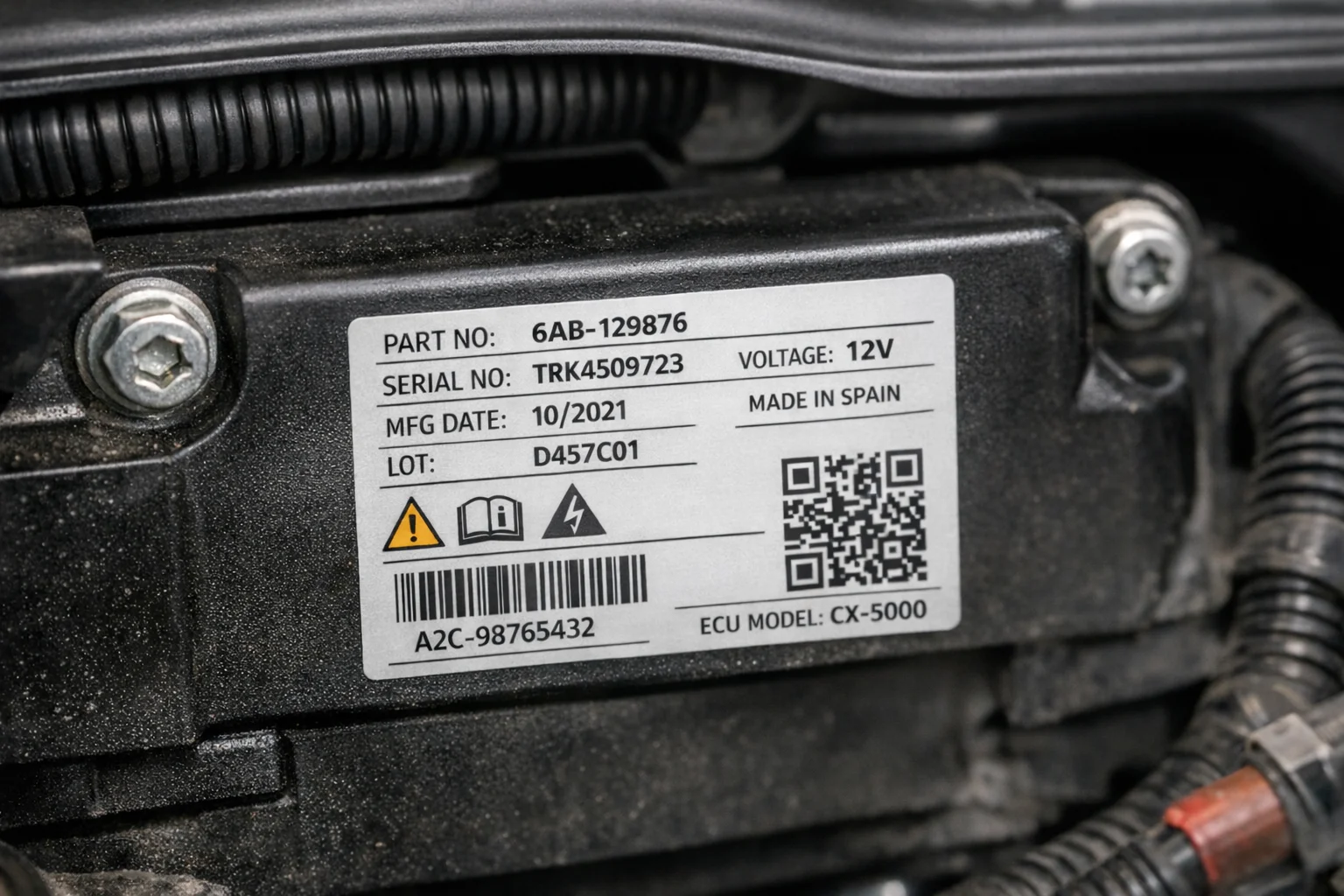
Labels for automotive
Automotive demands labels that withstand the whole process: from the assembly line to the outside of the vehicle or the inside of the engine. Oily surfaces, extreme temperature ranges and cleaning solvents rule out most conventional materials.
Common materials
See related materials
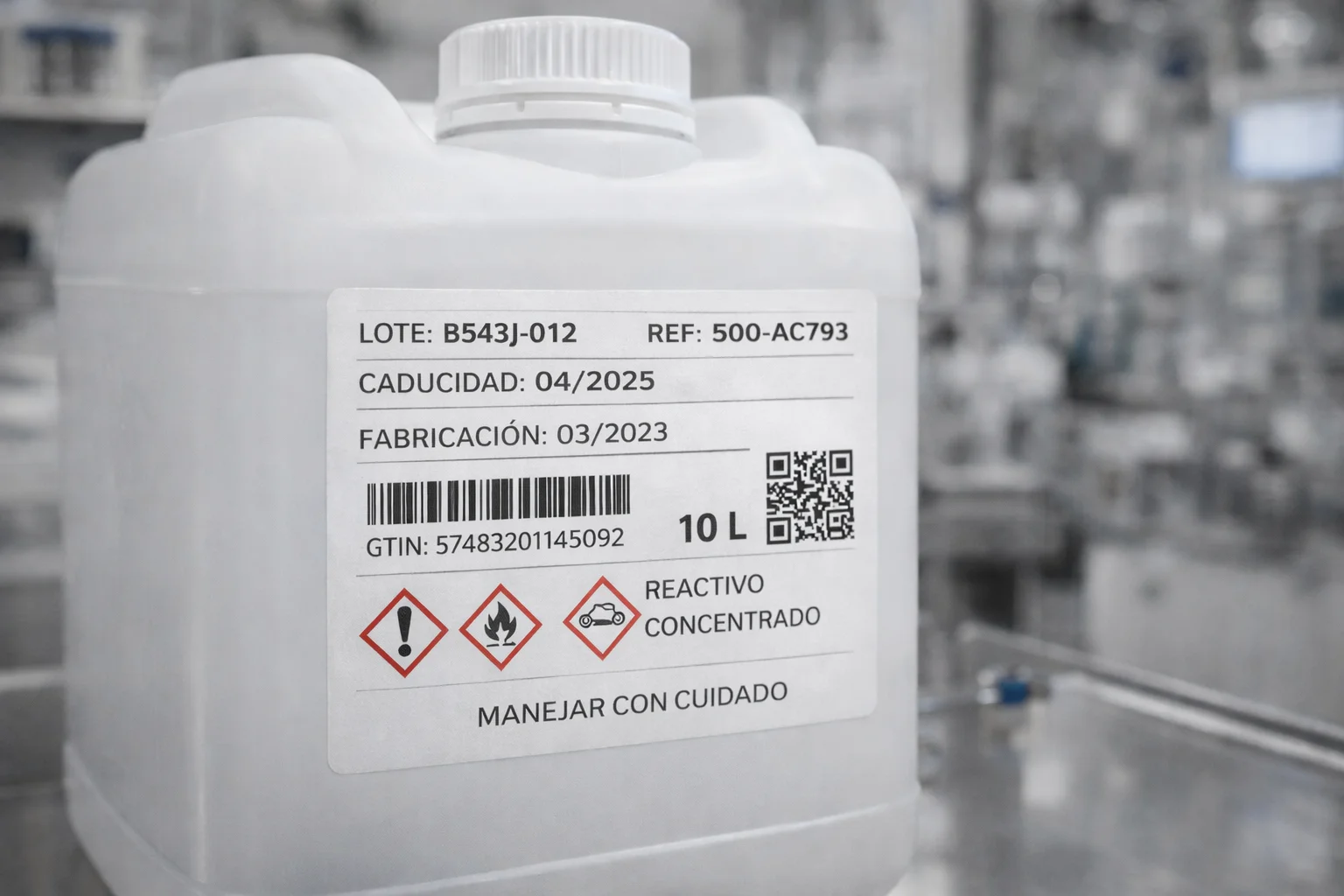
Labels for chemicals and pharmaceuticals
Labelling in chemicals and pharmaceuticals has direct legal implications. The material's durability under aggressive chemical conditions is not optional: it is a requirement.
Common materials
See related materials
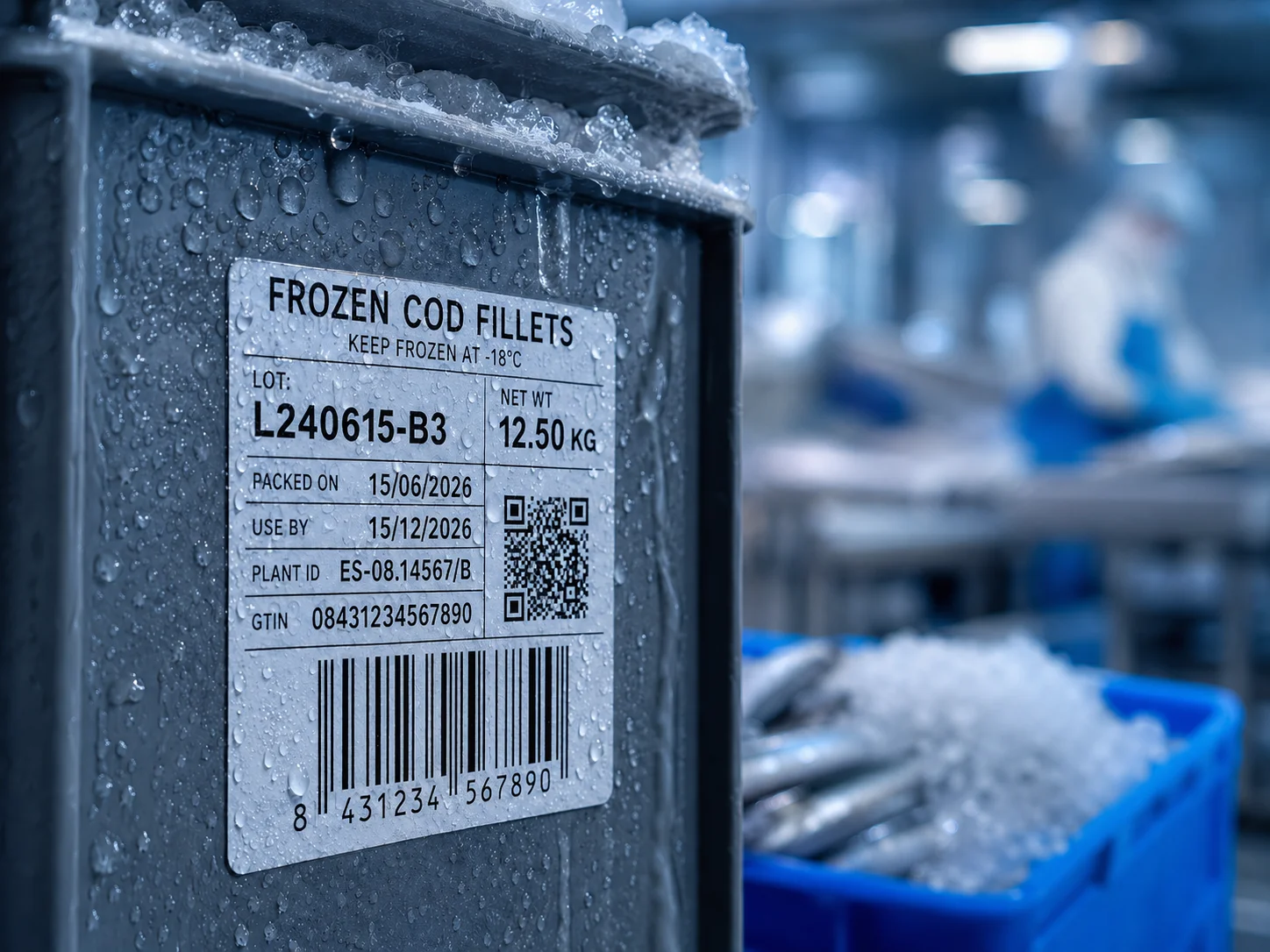
Labels for the food industry
The food production environment combines cold, humidity, condensation and aggressive cleaning cycles. Labels must adhere in cold conditions, withstand industrial washing and meet food contact regulations where applicable. An unsuitable material peels off in the cold store or loses the print during the process line.
Common materials
See related materials
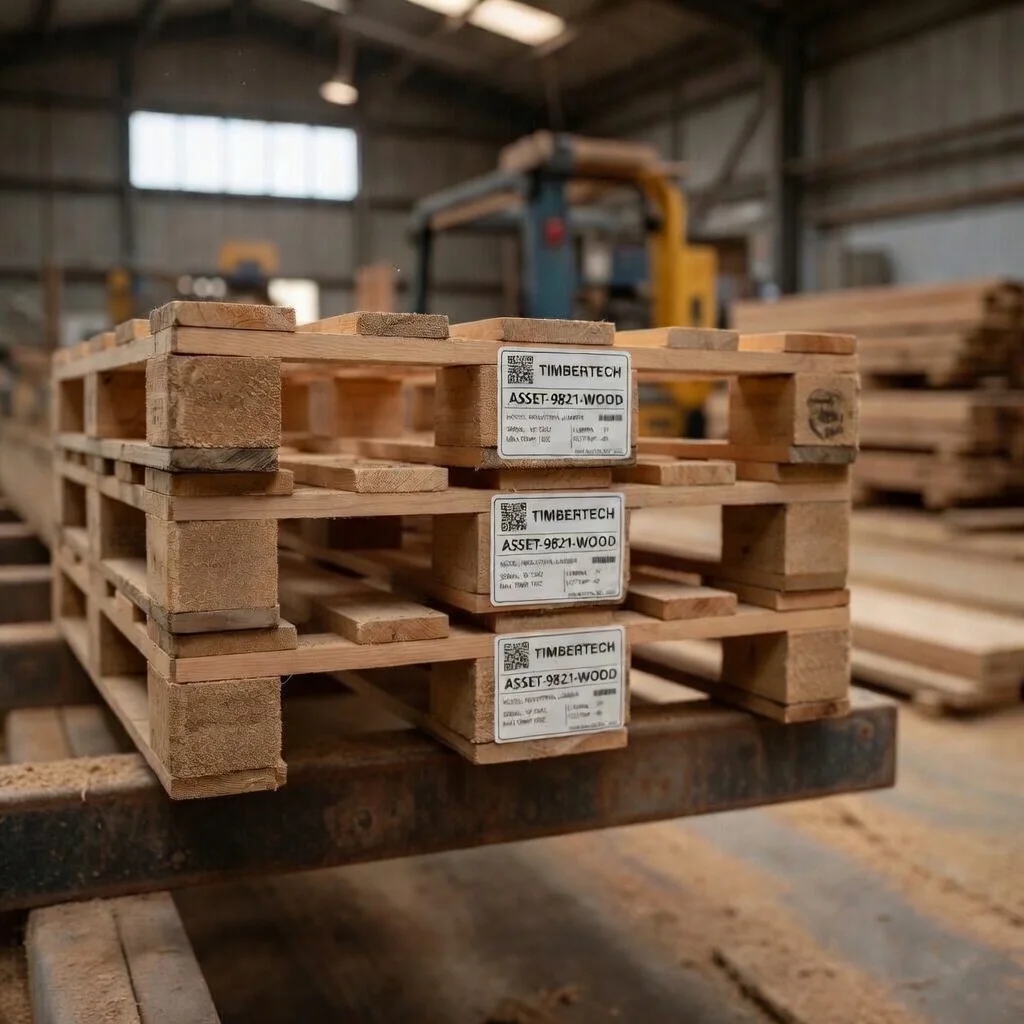
Labels for the wood industry
Wood is a rough, porous surface with natural variability that makes conventional adhesion difficult. Boards, pallets and panels are stored outdoors for weeks and exported in sea containers, which calls for materials with genuine UV resistance and cohesion that does not fail under prolonged ambient humidity.
Common materials
See related materials
Labels for electronics
Printed circuit boards and microcomponents go through aggressive processes: reflow soldering, ultrasonic solvent washing and handling in controlled ESD environments. The label must withstand the whole process and remain legible to a barcode scanner at very small formats.

Common materials
See related materials
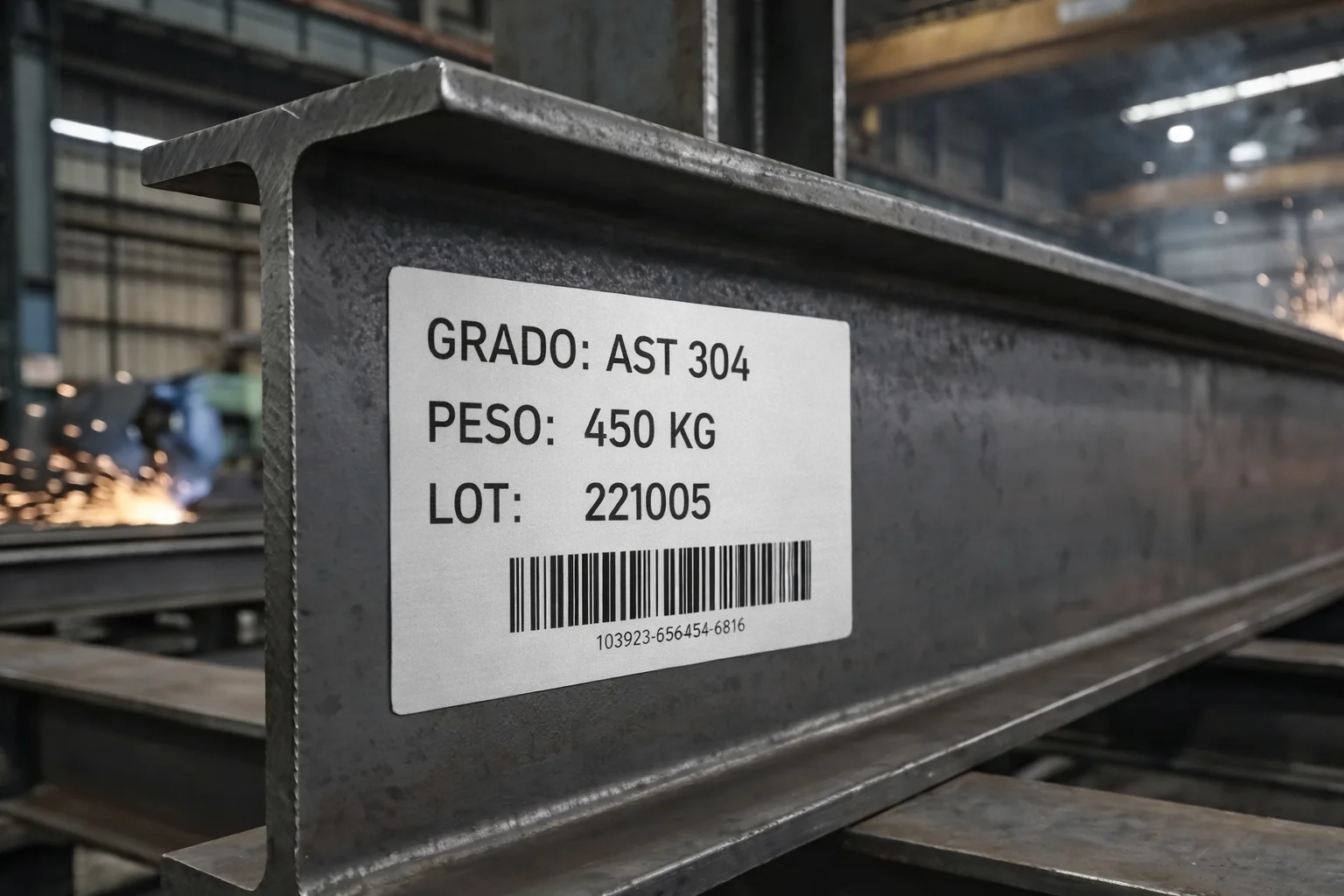
Labels for metals
Steel, aluminium and iron are worked, stored outdoors and transported in conditions that wear out any conventional label. Freshly galvanised or chemically treated surfaces make initial adhesion difficult, and mechanical abrasion during handling puts the whole label construction to the test.
Common materials
See related materials
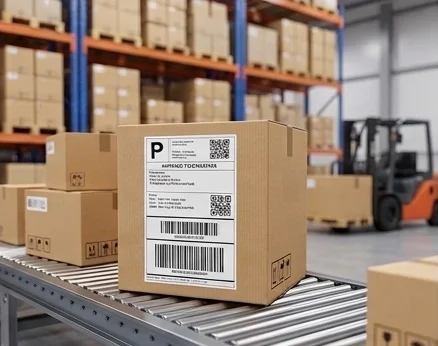
Labels for logistics and warehousing
In logistics, volume is everything. Labels are produced and applied in large quantities, scanned at speed on conveyor belts and must withstand the full journey from the origin warehouse to the final destination. A failed read rate at the scanner is not a minor detail: it's a line stoppage.
Common materials
See related materials
Quick guide by sector
What label each sector needs
Each industry imposes dominant conditions that determine the label material. This summary guides the choice by sector; each page has the full technical detail.
| Sector | Dominant conditions | Common materials |
|---|---|---|
| Food | Cold, washing, humidity and food contact | Polypropylene, cold-chain stable adhesives |
| Automotive | Oils, solvents and extreme temperatures | Polyester, high temperature |
| Chemicals and Pharma | Acids, alkalis, cryogenic conditions and batch traceability | Chemical-resistant polyester |
| Metals and steel | Shot blasting, outdoor exposure and metal surfaces | Reinforced polyester, high temperature |
| Electronics | Reflow oven, IPA cleaning and ESD environments | High-temperature polyester |
| Logistics and warehousing | Handling, picking and high-turnover shipping | Paper and polypropylene for thermal printing |
| Wood | Porous surfaces and outdoor exposure | High-tack adhesives for porous surfaces |
Materials catalogue
Know your sector but not sure which material to choose?
Our material data sheets cover temperature, adhesion, chemical resistance and construction specifications so you can compare options before you get in touch. They are the starting point for a well-informed choice.
Direct advice
Have a need that doesn't fit any standard category?
Many industrial labelling needs combine variables with no predefined solution. If you tell us the surface, the environment, the temperature and the end use, we can put together a proposal from the very first contact.
Contact us nowLooking by type of application instead?
If what you need is an outdoor label, a chemical-resistant one, a cold-chain label or one with a barcode, check our applications guide. We filter by technical condition, not by sector.
Frequently asked questions
Common questions before choosing a material by sector
Answers to the most frequently asked questions about materials, applications and compatibility by sector.
What happens if my process combines conditions from two different sectors?+
It's more common than it seems: parts that go through a curing oven (high temperature) and then move to an outdoor warehouse (UV and humidity), or shipping labels that also serve as asset identification for years. In these cases we prioritise the most demanding condition and look for a material that covers it without unnecessarily increasing the cost of the rest. A solution usually exists; what matters is defining the label's full life cycle properly.
What information do you need to put together a material proposal?+
Three details are enough to get started: the surface it will be applied to (metal, plastic, cardboard, wood…), the conditions of use (temperature, humidity, chemicals, outdoor/indoor) and how long the label needs to last in that environment. If we also know the printing process available, we can put together the full proposal in the first contact.
Do you run short batches to validate before full-scale production?+
Yes. For new applications or critical conditions of use, it's standard practice to start with a sample or a validation batch before launching production. This confirms adhesion, code readability and resistance to the real environment without committing to a firm order. It's especially common in automotive, chemicals and thermal processes.
Which thermal transfer printers are your materials compatible with?+
The materials in our catalogue are compatible with the main thermal transfer printer brands: Zebra, Honeywell, SATO, Datamax, TSC and Intermec, among others. Compatibility for direct thermal is equally broad. If you have a specific printer, let us know and we will confirm the optimal material and ribbon combination.
Can you supply the same label in several formats for different points of use?+
Yes. This is common among companies with several plants or separate processes: the same base material in roll form for in-line printing, in sheets for office printing and in flat sheets for manual application. We can also combine different sizes or finishes while keeping the same adhesive and face material, to simplify stock management.
Contact
Need a solution?
The more you tell us about the sector, the surface, the environment and the end use, the better we can guide you towards the right material and format from the first contact.
- Self-adhesive and non-adhesive labels.
- Guidance on materials and solutions by sector.
- Reply within 24 hours.