What is the difference between RFID UHF and RFID HF?+
UHF · 860–960 MHzReading up to 12 m. Standard in logistics, pallet traceability and vehicle access control.
EPC Gen2 / ISO 18000-63 HF · 13.56 MHzShort distances — up to 1 metre. Standard in NFC and applications with higher security or with liquids.
ISO 15693 The choice depends on the required reading distance, the environment and the specific application.
What is an On-Metal RFID label and when is it needed?+
Metal surfaces absorb and reflect radio waves, disrupting the performance of a standard RFID label's antenna. An On-Metal label incorporates an insulating layer between the antenna and the metal surface that protects the electromagnetic field and allows reading on steel, aluminium and any conductive surface. It is the right solution for metal pallets, machinery, pipes, tools and vehicles.
What data can an RFID chip store?+
UHF · EPC Gen296-bit EPC memory (unique 24-digit hexadecimal code). Optionally, user memory of up to 512 bits or more on premium chips.
HF · ISO 15693User memories from 512 bytes to several kilobytes depending on the chip selected.
Data is programmed during the conversion process or on site with an RFID encoder.
How is RFID reading integrated with the ERP or WMS system?+
- 01Fixed gate readers automatically capture tags as they pass — with no manual intervention.
- 02The data is sent to the management system through integration software or directly via Ethernet or Wi-Fi.
- 03Most modern enterprise resource planning (ERP) and warehouse management (WMS) systems have native RFID modules or standard integration APIs.
Critical stepThe chip's encoding configuration must be defined before production to guarantee correct integration with the system.
Can I combine RFID and a barcode on the same label?+
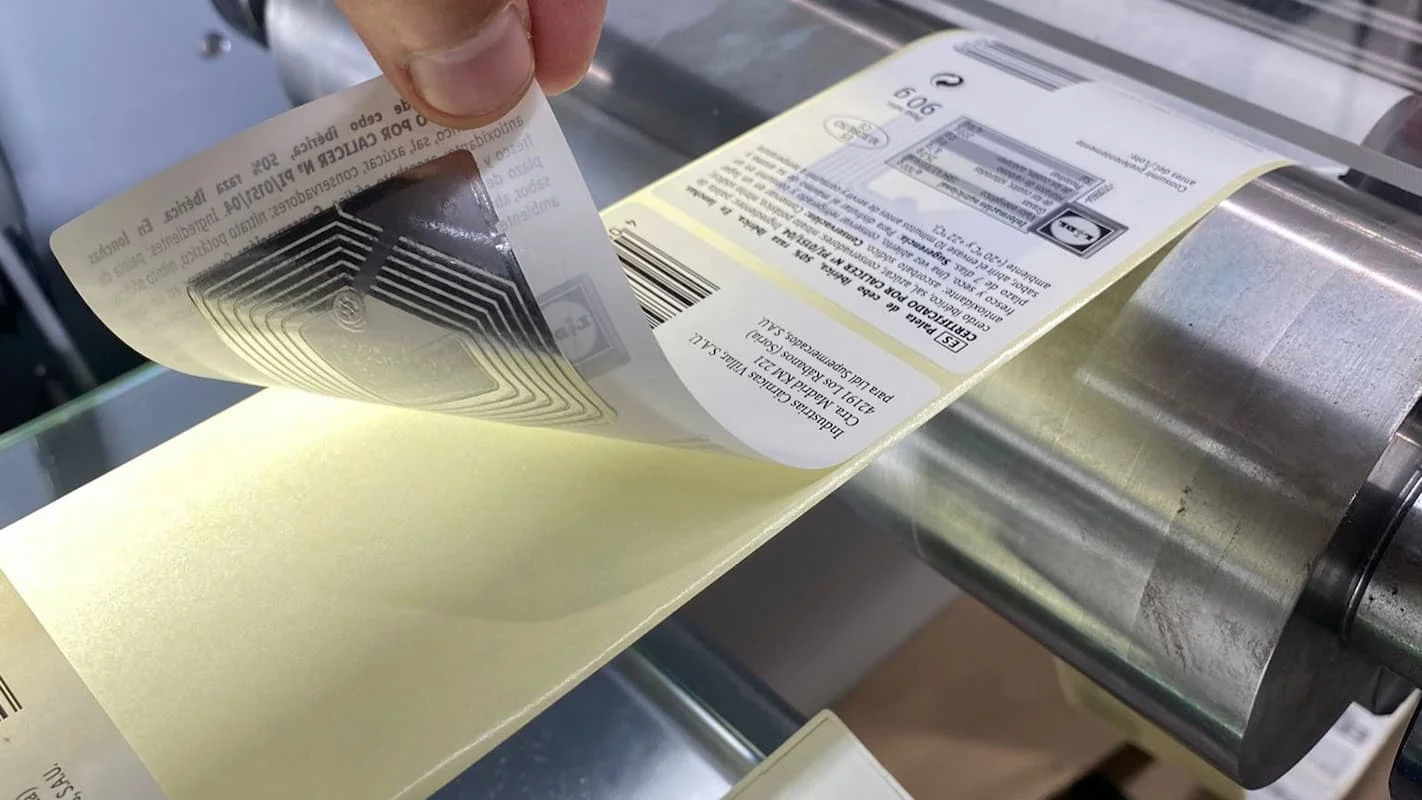
Yes. The Smart Label combines an RFID chip with its inlay and a visible printed face on a single label. That face can include a 1D barcode, DataMatrix, QR code, text and a logo. It is the usual transition solution for facilities still operating with barcode readers that want to bring in RFID gradually.
How is an RFID inlay customised and converted into a finished label?+
We define the complete technical specification — inlay by frequency and environment, face material, adhesive and printing with variable data if required — and manage the conversion process from start to finish. We include a pilot test before final production.
Can you send a sample before production?+
Yes. Before any production run, we can send inlays or finished RFID labels so you can validate the reading distance, frequency and behaviour on the real substrate or packaging. This is the standard step in RFID projects, since performance varies depending on the environment and the face material.