Lit-Off Desarrollo

Industrial sector

Labels for chemicals and pharmaceuticals

Labels for chemicals and pharmaceuticals: withstand acids, alkalis and cryogenic temperatures

We supply resistant self-adhesive labels for chemicals and pharmaceuticals: contact with acids, alkalis and solvents without fading or lifting, cryogenic conditions down to −196 °C in liquid nitrogen, and compliance with GHS and BS 5609 for maritime transit of dangerous goods. From the industrial drum to the laboratory vial. We have supplied the chemical and pharmaceutical industry across Spain and Europe since 1994.

Temperature

−196 °C to +150 °C

Standard

GHS · BS 5609

Resistance

Acids · Alkalis

Traceability

DataMatrix · Batches

Main applications

  • GHS labelling of hazardous chemical products.
  • Identification of samples in cryogenic storage (−196 °C).
  • Maritime transport labels with BS 5609 certification.
  • Pharmaceutical batch traceability with DataMatrix serialisation.
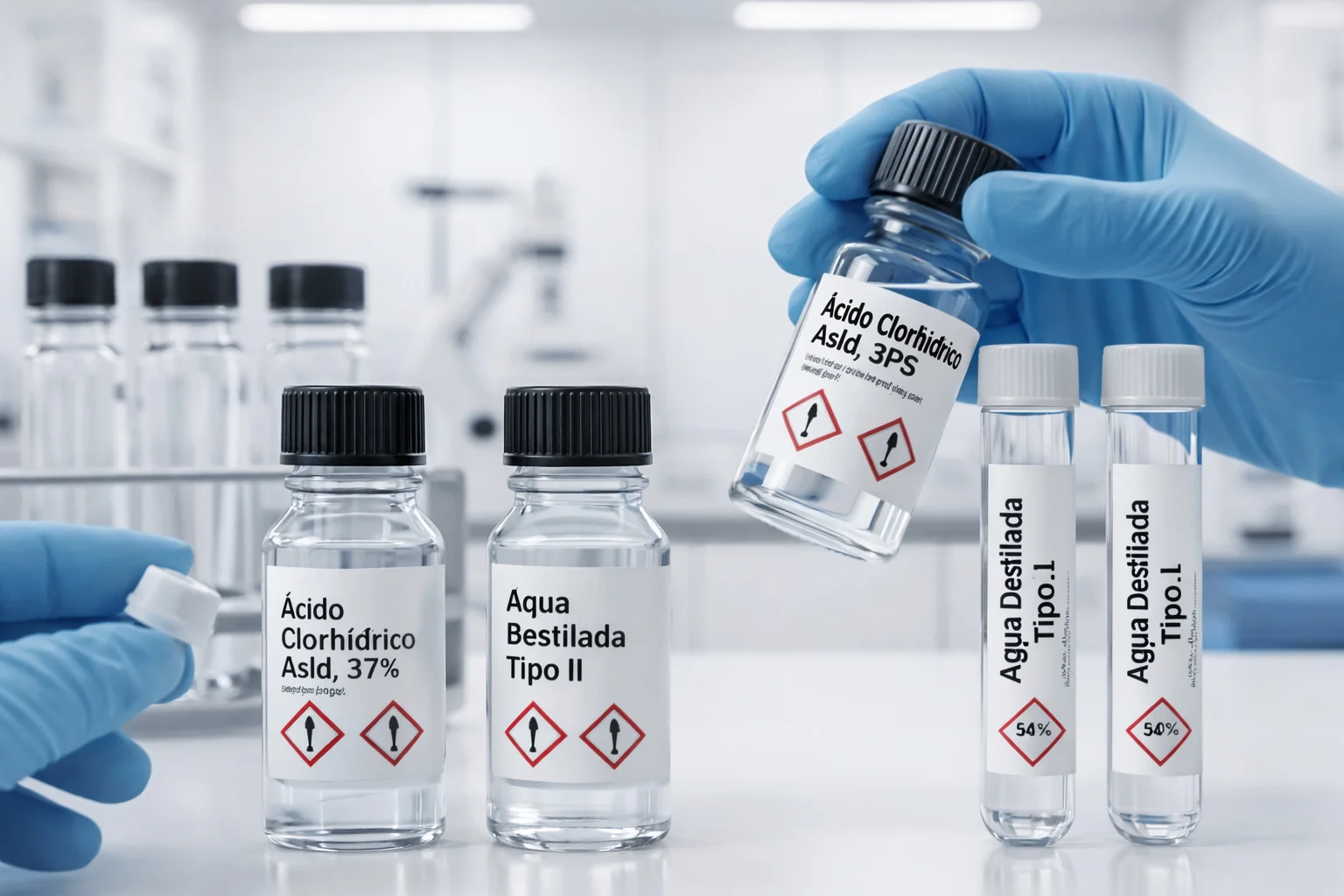
  • Identification of laboratory glass, HDPE and PP containers.
Industrial labels for chemicals and pharmaceuticals

Common materials in chemicals and pharma

  • Polyester: resistant to acids, alkalis and solvents. The reference material for GHS and general labelling.
  • Security materials: destructible and void labels for sealing pharmaceutical containers. They fragment when removal is attempted.
  • Polypropylene: flexible, adapts well to bottles and curved containers. For product labelling when chemical demands aren't extreme.

Have specific customer regulations?

Tell us the product, the container, the applicable regulation and the environment of use. We will guide you from the first contact.

Ask about chemicals and pharma →

Environment and technical requirements

Conditions of use in chemicals and pharmaceuticals

In chemicals and pharmaceuticals the label isn't just an information carrier: it's a part of the safety and traceability system. A label that lifts, fades or loses legibility can lead to a regulatory compliance incident with legal consequences.

Common conditions of use

  • Immersion in or prolonged contact with acids, alkalis, organic solvents and laboratory reagents. The material must keep its adhesion and legibility under all conditions.
  • Cryogenic storage in liquid nitrogen (−196 °C) for biological, pharmaceutical and diagnostic samples.
  • Maritime transport of dangerous goods under IMDG regulations: labels must withstand immersion in sea water and port conditions.
  • HDPE, PP and laboratory glass surfaces with low surface energy that make conventional adhesion difficult.

Technical requirements and regulations

  • BS 5609 Sections 2 and 3 certification for labelling dangerous substances in maritime transit: sea water immersion, UV and abrasion testing.
  • Full compliance with the GHS system (CLP Regulation): hazard pictograms and H and P statements, legible throughout the container's service life.
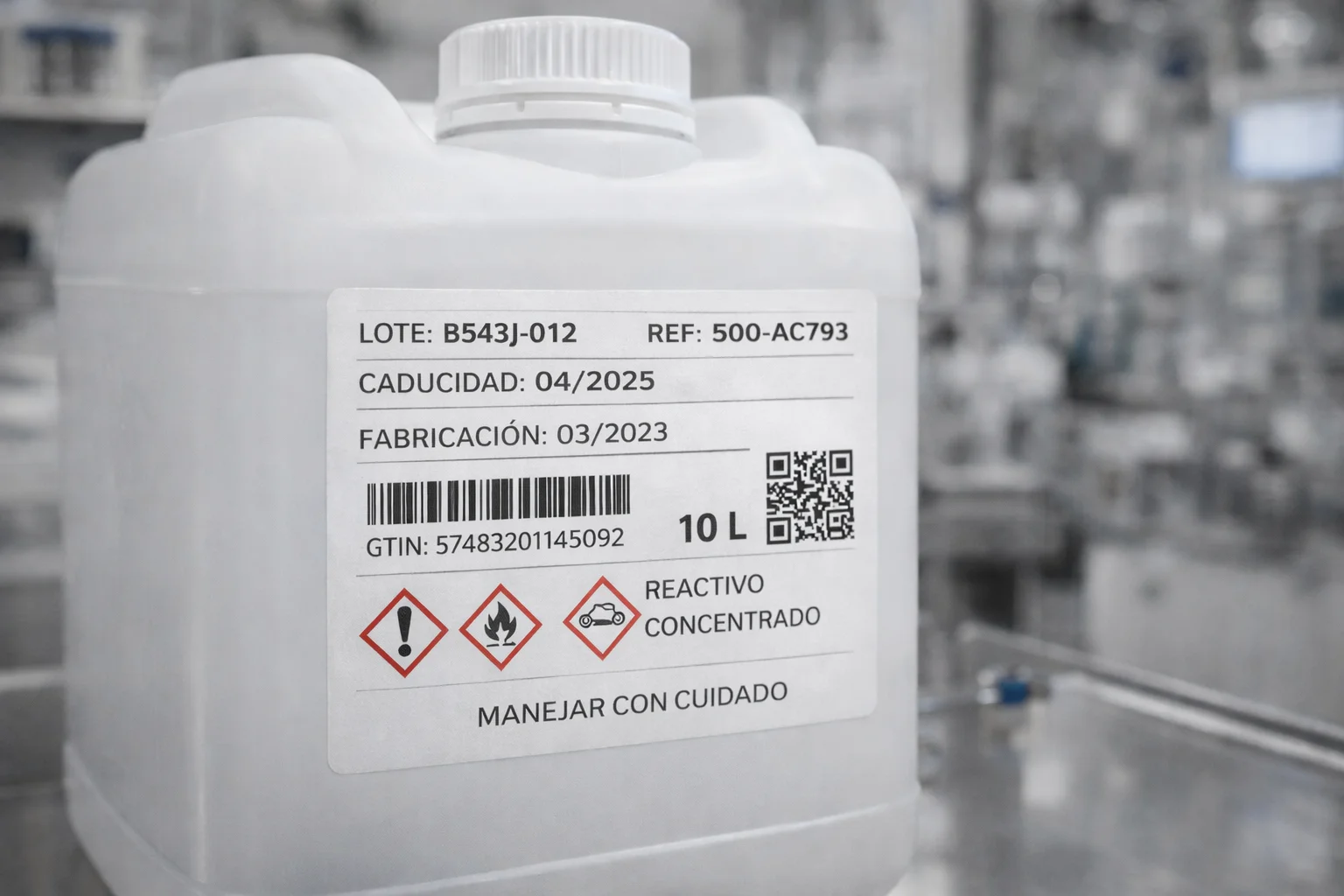
  • Pharmaceutical batch traceability with serialisation and DataMatrix codes: reliable reading after handling, storage and dispensing.
  • Printing with resin ribbon for maximum chemical resistance of the ink layer: the code doesn't fade with the product or with cleaning solvents.
In chemicals and pharmaceuticals the margin for error is minimal. An incorrect label isn't a cosmetic problem: it's a safety risk and a compliance incident. We recommend validating the material with a sample before production.
Labelling applications in the chemical and pharmaceutical sector

Where our labels are used

From the reagent bottle in the laboratory to the dangerous goods container on the ship, the label is the only piece of information that travels with the product throughout its chain of use.

Specific applications

Where our labels are used

GHS labelling of hazardous products

Products classified as hazardous under GHS must carry labels with pictograms and hazard and precautionary statements that stay legible throughout the container's service life, including exposure to the contents themselves.

Polyester · High-performance adhesive · Resin ribbon

Cryogenic storage down to −196 °C

Biological and pharmaceutical samples stored in liquid nitrogen require labels specifically designed for cryogenic conditions: materials that don't lose adhesion or become brittle at extreme temperatures, even after repeated freeze-thaw cycles.

Cryogenic material · Cryogenic-grade adhesive

Maritime transport of dangerous goods (BS 5609)

For maritime transport of dangerous substances, IMDG regulations require labels certified to BS 5609: they must pass sea water immersion testing for 3 months, UV resistance and abrasion resistance without losing legibility.

BS 5609 Sections 2 and 3 · IMDG

Pharmaceutical traceability with serialisation

Batch traceability in pharma requires labels with a DataMatrix or QR code that stay legible at every stage: manufacturing, storage, transport and dispensing. The material and ink must be compatible with the customer's reading equipment.

Polyester · DataMatrix · Serialisation

Technical material families

Common materials in chemicals and pharma

The choice of face material depends on the environment of use, the applicable regulation and the surface conditions. These are the most common technical families in this sector.

01

Material

Polyester

The reference material for GHS, container labelling and traceability in chemicals and pharma. Resists diluted acids, alkalis, organic solvents and cleaning products without losing adhesion or legibility.

  • High chemical resistance: acids, alkalis, solvents.
  • Temperature range: −40 °C to +150 °C.
  • Compatible with resin ribbon printing (maximum durability).
  • Matt white, gloss, silver or clear.
02

Material

Polypropylene

A useful option when flexibility, good presentation and certain humidity or handling conditions are the priority. More economical than polyester; suitable when chemical demands aren't at their highest.

  • Flexible: adapts to curved surfaces and bottles.
  • Moderate resistance to humidity and cleaning products.
  • Temperature range: −20 °C to +80 °C.
  • Matt white, gloss and clear finishes.
03

Material

Security materials

Technical families that incorporate visible tamper-evidence or destruction mechanisms —VOID film, destructible paper, holographic— depending on the surface and the level of control required. Their basis is the face material's mechanism of action, not the intended use.

  • VOID film: transfers a visible pattern when removal is attempted.
  • Destructible paper: fragments with no possibility of reuse.
  • Holographic: visual authentication that's hard to replicate.
  • Compatible with variable printing (code, numbering).

Sector needs and environments

Common applications in chemicals and pharma

In chemicals and pharma, choosing a material isn't enough on its own. The type of substance, the cleaning protocol, the traceability required and the risk of tampering all matter too. These are the sector's most common needs.

Application

Chemical-resistant labels

Solutions for environments with splashes, industrial cleaning or frequent contact with aggressive substances. The right choice depends on the chemical agent, its concentration and whether exposure is occasional or continuous.

  • Solvents, acids, oils and cleaning agents.
  • Resistance table by agent and the right combination.

Application

Tamper-evident labels

Solutions for opening control, product integrity, warranty and tamper evidence. For pharmaceutical and laboratory containers where the chain of custody of the contents must be documented.

  • Visible evidence of opening or attempted removal.
  • Selection based on risk level and surface type.

Application

Labels with codes and traceability

Identification for batches, internal control, serialisation and asset or product tracking. The code must stay legible at every stage: manufacturing, storage, transport and dispensing.

  • DataMatrix, QR, 1D barcode.
  • Sequential serialisation and batch numbering.

Special case

Labelling for cryogenic environments

Cases where extreme temperature shapes the whole solution: standard adhesive fails at −196 °C, the face material can't become brittle, and the code must stay legible after freeze-thaw cycles.

  • Laboratory tubes, vials and cryovials.
  • Requires validating the material with a prior sample.

Regulations and sector requirements

Regulations applicable in chemicals and pharmaceuticals

The chemical and pharmaceutical sector is one of the most heavily regulated when it comes to labelling. Non-compliance can mean penalties, product recall and civil liability. Choosing the right material and print method is part of regulatory compliance.

GHS

Global regulation

The Globally Harmonised System for the classification and labelling of chemicals (GHS) is mandatory in the EU (CLP Regulation) and in more than 70 countries. Labels must display hazard pictograms, signal words and H and P statements legibly throughout the container's service life.

  • High-legibility, high-contrast hazard pictograms.
  • Print resistant to the labelled product itself.
  • Material that doesn't deteriorate under warehouse conditions.

BS 5609

Maritime transit

A British standard adopted internationally for certifying labels on containers of dangerous goods in maritime transit. Testing includes immersion in artificial sea water for 3 months, UV exposure and abrasion resistance, with legibility verified at the end of the process.

  • Section 2: certification of the label material.
  • Section 3: certification of the print ink or ribbon.
  • Mandatory for IMDG shipments by sea.

IMDG

Maritime transport

The International Maritime Dangerous Goods Code governs the sea transport of substances classified as dangerous. It sets the marking, labelling and documentation requirements for each hazard class. Labels must meet specific dimensions, colours and symbols for each risk class.

  • Label dimensions and colours by hazard class.
  • Combined with GHS labelling where applicable.
  • Separate package label and container marking.

Pharmaceutical traceability

Serialisation

The EU Falsified Medicines Directive (FMD) and equivalent regulations in other markets require individual serialisation of medicines. The DataMatrix code printed on the label must be legible throughout the chain up to the point of dispensing, with specific requirements for contrast and quiet zone.

  • Grade A/B DataMatrix code (ISO/IEC 15415).
  • Batch number, expiry date and serial number.
  • Compatible with DSCSA (US market) and FMD (EU) systems.

Frequently asked questions

Common questions about labels for chemicals and pharmaceuticals

Answers to the most frequently asked questions before requesting a sample or quote for a project in the chemical or pharmaceutical sector.

Which label is used for hazardous chemical products (GHS)?+

For GHS labelling of hazardous chemical products we use polyester labels with a high-performance adhesive, printed by thermal transfer with resin ribbon. The material must keep the hazard pictograms and warnings legible after exposure to the product, humidity and transport. For containers destined for maritime transit, the combination must meet BS 5609 certification.

Which label withstands liquid nitrogen (−196 °C)?+

Storage in liquid nitrogen at −196 °C requires materials specifically designed for cryogenic conditions: they don't become brittle, don't lose adhesion, and the code stays legible even after repeated immersion and recovery cycles. Standard adhesive fails at these temperatures. Contact us and we will guide you on the right material and adhesive for your specific cryogenic application.

What is BS 5609 certification and when is it mandatory?+

BS 5609 is a standard that certifies the resistance of labels and inks for use on containers of dangerous substances in maritime transit. It's mandatory when the product is classified as dangerous under IMDG regulations and transported by sea. Certification includes immersion testing in artificial sea water for 3 months, UV resistance and abrasion resistance. Section 2 certifies the label material; Section 3, the ink or ribbon.

Do self-adhesive labels stick to laboratory glass and HDPE?+

Laboratory glass is a high-energy surface and takes most permanent acrylic adhesives well. HDPE and PP are low-energy surfaces and require high-performance adhesives or, in some cases, prior surface treatment. For cryogenic HDPE or PP vials, a material that also keeps its adhesion at extreme temperatures is needed.

Can you prepare labels with serialisation and a DataMatrix code for pharma?+

Yes. We supply labels for pharmaceutical traceability with DataMatrix, QR and 1D barcode in the formats and sizes required by each application. The usual material is polyester with resin ribbon to keep the code durable and legible under pharmaceutical conditions of use. Tell us the code quality requirements (ISO grade, reading equipment) and we will guide you correctly.

Can you send a sample before production?+

Yes. In chemicals and pharmaceuticals, where the environment can be especially aggressive and the regulatory requirements very strict, validating the material with a sample before production is essential. Tell us the product, the type of container, the applicable regulation and the process of use, and we will prepare a sample suited to your application.

What guarantees that a label meets BS 5609 for maritime transit?+

BS 5609 requires the full material, adhesive and print combination to pass immersion testing in sea water for 3 months. Only combinations specifically tested under this standard can claim compliance. The materials and ribbons we work with carry manufacturer BS 5609 certification; if you need it for your validation or audit process, we will provide it.
Contact

Do you work with chemical or pharmaceutical products?

Tell us the product, the type of container, the applicable regulation and the process of use. We will guide you in choosing the material from the first contact.

  • No-obligation technical advice.
  • Reply within 24 hours.
  • Material samples for prior validation.
  • Guidance on GHS, BS 5609 and pharmaceutical traceability.
Please enter your company name.
Please enter your name.
Enter a valid email address.
Please write your message.
You must accept the privacy policy to continue.