Industrial labels with no adhesive
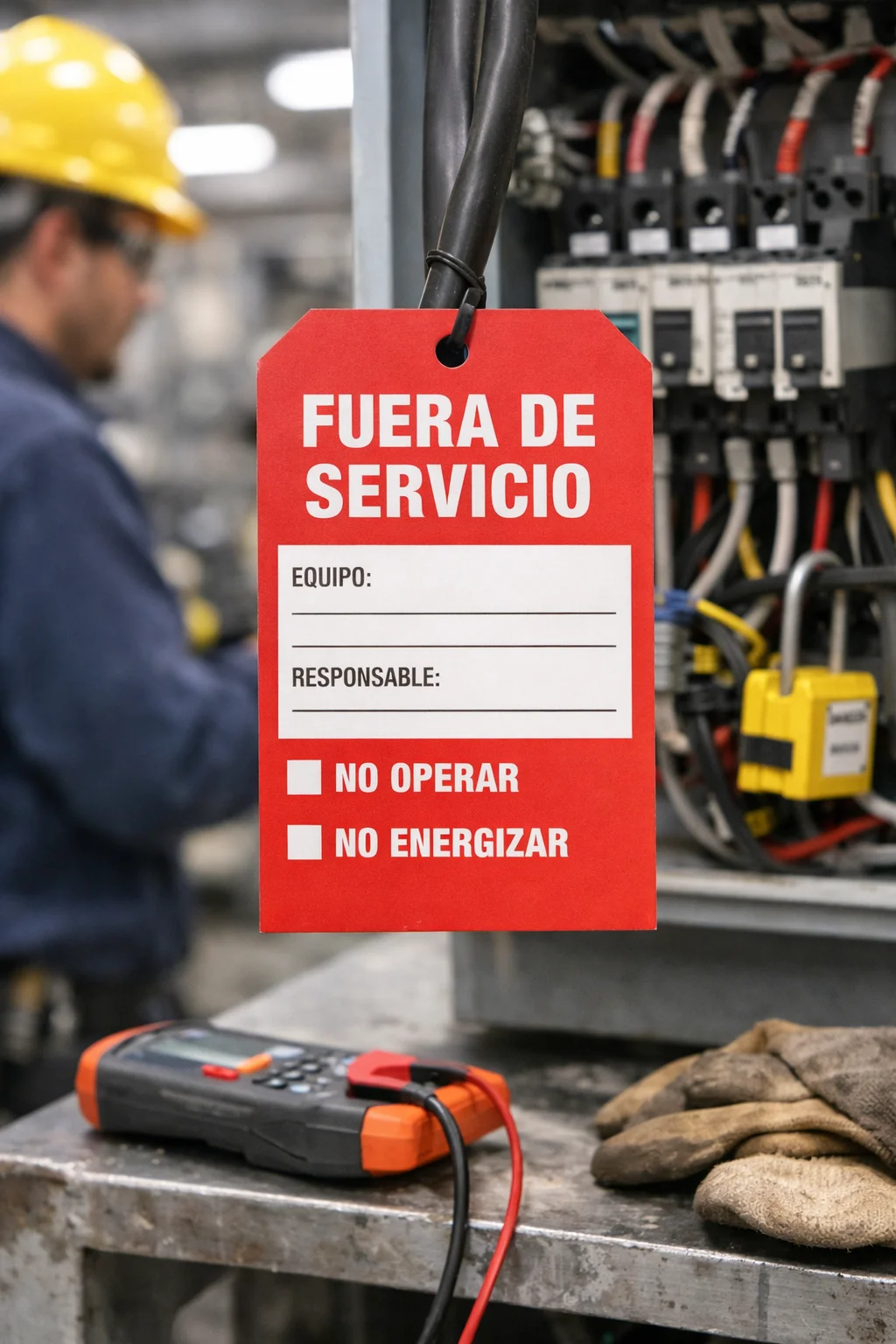
Hang tags: mechanical fixing for when adhesive is not the most practical solution
On pallets, coils, metal profiles or bales, adhesive can work technically, but it is not always the most practical: moving surfaces, labels that are changed frequently, or geometries where sticking does not give good results. The hang tag is fixed with a cable tie, wire, hook or through-bolt. No adhesive, no surface preparation, no risk of lifting off through handling.
Also known as tie-on tags, identification tags or non-adhesive labels. The name varies by sector, but the function is the same: identify without needing to stick to the product.
Temperature
-20 °C to +80 °C
Fixing
Hook / Cable tie / Wire / Bolt
Printing
TT wax-resin/resin ribbon
Adhesive
No adhesive
Common applications
- Identification of coils, bales and pallets in warehousing and dispatch.
- Traceability of profiles, bars and steel material.
- Batch and weight control in production and short-cycle logistics.
- Identification of material in international transit with variable temperature and humidity conditions.
Fixing methods
Hooks, plastic cable tie, bolts or wire. The choice depends on the type of load, the environment and whether the label needs to be replaceable or is permanent.
Material variants
- Synthetic face material: waterproof film by construction. For outdoor use and environments with persistent moisture.
- Laminated kraft (KPK): Kraft/PET/Kraft structure, resistant to water and tearing. For outdoor exposure, transit and large formats.
- Polyester (PET): high chemical and mechanical resistance. For environments with oils or solvents, or where resistance up to 150 °C is required.
Temperature above +80 °C?
For thermal processes (shot blasting, galvanising, ovens) where the standard hang tag does not resist, see the ARGIPRINT° high-temperature range with no adhesive.
See high-temperature labels →Selection criteria
When to choose a hang tag and when not to
The hang tag solves the cases where adhesive is not the most practical option or where the label needs to be replaceable without leaving a mark on the product.
When to choose it
- Dusty, greasy, rough or rusty surfaces where sticking is not the most practical or reliable option.
- Products that change hands and need the label replaced without damaging the surface.
- Large loads (coils, bales, pallets, profiles) where a self-adhesive label does not cover well.
- Identification during international transit with variable temperature and humidity conditions.
When it is not the right choice
- Smooth, clean surfaces where a self-adhesive label applies quickly and reliably.
- Automated application on a production line (self-adhesive is more compatible with dispensers).
- Very small formats where the hanging hole takes up a significant proportion of the print area.
Recommended alternative
If the application involves temperatures above +80 °C (ovens, shot blasting, galvanising), the standard hang tag is not enough. See the ARGIPRINT° high-temperature range.
See high-temperature labels →Application sectors
Where hang tags are used
Any sector that moves bulk product, in coils, profiles or bales finds a reliable identification solution in the hang tag.
Sector
Wood and derivatives
Identification of boards, beams, pallets and wood packages. On porous surfaces or with sawdust, the hang tag is a common choice when adhesive is best avoided or when the label needs to be replaceable during the process.
See wood sector →Sector
Metals and steel
Labelling of profiles (UPN, IPN, HEA), bars, rebar, wire and steel coils. Oxidised or untreated metal surfaces mean adhesive is not always the most practical option: the hang tag is the usual solution.
See metals sector →Sector
Manufacturing and industry
Production control, manufacturing orders and batch tracking on the shop floor. The hang tag attaches to mesh, strapping or the product's handle with no need for adhesive.
See all sectors →Material variants
Materials by environment and level of demand
The choice of material depends on the environment of use, the expected duration and the type of printing. Three options to cover everything from moderate environments to applications with chemical or thermal demands.
Material
WaterproofSynthetic face material
- Resistant to moisture and rain
- Moderate outdoor exposure and aggressive environments
- Greater durability than paper
- Metals, construction and transport
Material
Laminated kraft (KPK)
- Kraft/PET/Kraft structure: resistant to water and moisture
- High mechanical resistance to tearing and folding
- Suitable for rain, fog and outdoor stock
- Large formats with a lot of information — transit and batch control
Material
Polyester (PET)
- High resistance to oils, solvents and chemical products
- Withstands up to 150 °C without losing dimensional stability
- Waterproof and resistant to handling in aggressive environments
- Chemicals, automotive and industrial component manufacturing
Fixing methods
How the label is fixed to the product
With no adhesive, the hang tag attaches to the product using different systems depending on the type of load, the lifecycle and the required level of security.
| Method | Typical use | Main advantage | Consideration |
|---|---|---|---|
| Hooks | Coils, profiles and parts with an accessible hole or slot | Fast installation and removal with no tools | Requires a hole or attachment point on the product |
| Plastic cable tie | Profiles, coils, equipment, pallets and large loads | Greater mechanical strength, does not come undone | Requires cutters to remove |
| Thin wire | Metal profiles, rebar, steel material | High resistance to tension and weight | Only for products where it does not affect the metal |
| Bolts | Machinery, industrial equipment and long-life assets | Permanent fixing, resistant to vibration | Requires a threaded point or drilled hole in the substrate |
Supply formats
How hang tags are supplied
The supply format determines how the label fits into the printing and application process. Three options depending on the printing system and the volume.
Fanfolded
Labels folded in a zig-zag for manual or semi-automatic feeding. Easy to use with thermal transfer printers. Ideal for medium volumes with variable data.
- Compatible with TT printers
- Easy handling on the shop floor
- Variable data per label
In rolls
Standard format for thermal transfer printers. Allows variable printing of batch, weight or barcode at the time of application.
- High print speed
- Integration with ERP / WMS
- Low cost per unit in volume
Die-cut loose sheets
Labels in A4 or a custom sheet size, for laser printing with variable or fixed data. Suited to short runs or processes with no TT printer available.
- Compatible with industrial laser printing
- Specific materials: KPK 842 and polyester 748
- Short runs and orders with variable design
Frequently asked questions
Common questions about industrial hang tags
What is the difference between a hang tag and a self-adhesive label?+
A hang tag has no adhesive: it is fixed to the product with hooks, a cable tie, bolts or wire passed through a hole or around strapping. It is the right solution when adhesive is not the most practical option (dust, grease, irregular texture, moving surfaces or labels that are replaced frequently), when the product changes hands and the label needs to be replaceable, or when you need to hang information from a coil, a pallet or a bale.
What hang tag material is best for outdoor or humid environments?+
For outdoor use or humidity we have three options: the synthetic face material, waterproof by construction and suited to aggressive environments; laminated kraft (KPK) withstands water and tearing; the KPK 800 and 874 variants add resistance to elevated temperature. Polyester (PET) is the choice where there is contact with oils or solvents, or where resistance up to 150 °C is required. The choice depends on the level of exposure, chemical aggression and the type of fixing.
Can barcodes or QR codes be printed on hang tags?+
Yes. Hang tags are fully compatible with printing 1D barcodes (Code 128, EAN) and 2D codes (QR, DataMatrix). To support scanner readability we recommend a matt surface and enough contrast between background and code.
What formats are hang tags supplied in?+
They are supplied fanfolded (zig-zag) for manual or semi-automatic feeding, in rolls for a thermal transfer printer, or as die-cut loose sheets for laser printing with materials such as KPK 842 or polyester 748.
Do hang tags support variable printing with batch, weight or destination data?+
Yes. With a thermal transfer printer connected to your management system, each label can be printed with variable data: batch number, weight, reference, destination or a unique barcode. It is the usual way of working in logistics and warehousing.
What is the minimum order quantity?+
We work with both short runs and large-volume production. The minimum quantity depends on the format, the material and whether the label carries pre-printed fixed content. Ask us about your case.
Can you send samples before production?+
Yes. We send samples of the material and the format so you can validate the print, the resistance and the fixing method before committing to a full run.
Can they be printed with my usual label printer?+
It depends on the format. Labels in roll or fanfolded form are compatible with standard thermal transfer printers. Loose sheets are printed with a laser printer. Tell us your equipment and we will confirm compatibility.
What is the difference between using card and a synthetic face material for hang tags?+
Laminated kraft (KPK) has a Kraft/PET/Kraft structure: it withstands water and tearing and is suited to large formats with a lot of information. The synthetic face material is fully waterproof and withstands rough handling and aggressive outdoor exposure better. For environments with persistent moisture or prolonged outdoor exposure, synthetic is the more robust option.
Full catalogue
All available materials
Polyester, polypropylene, direct thermal, coated paper, security and special solutions. Properties, adhesives and comparison.
See materialsApplications by sector
Labels for your industry
Automotive, chemicals, food, logistics, electronics and more. Conditions, recommended materials and technical criteria by sector.
Explore sectorsTechnical documentation
Materials technical data sheets
See the technical data sheets for the materials available for hang tags: specifications, grammage and resistance.
See technical data sheetsContact
Need hang tags for your process?
Tell us the type of surface, the fixing method and the environment. We will guide you to the most suitable material and format from the first contact.
- No-obligation technical advice.
- Response within 24 hours.
- Material samples when the project requires it.