Which label withstands shot blasting or sand blasting?+
Shot blasting and sand blasting are high-energy abrasive processes that can destroy a conventional label. For these applications we use reinforced polyester labels with high mechanical resistance, applied before the process with immediate-contact adhesives. The label must be removable or protected during the process, depending on the customer's production flow. We recommend validating with a field trial before production.
How is a steel heat identified under standard EN 10204?+
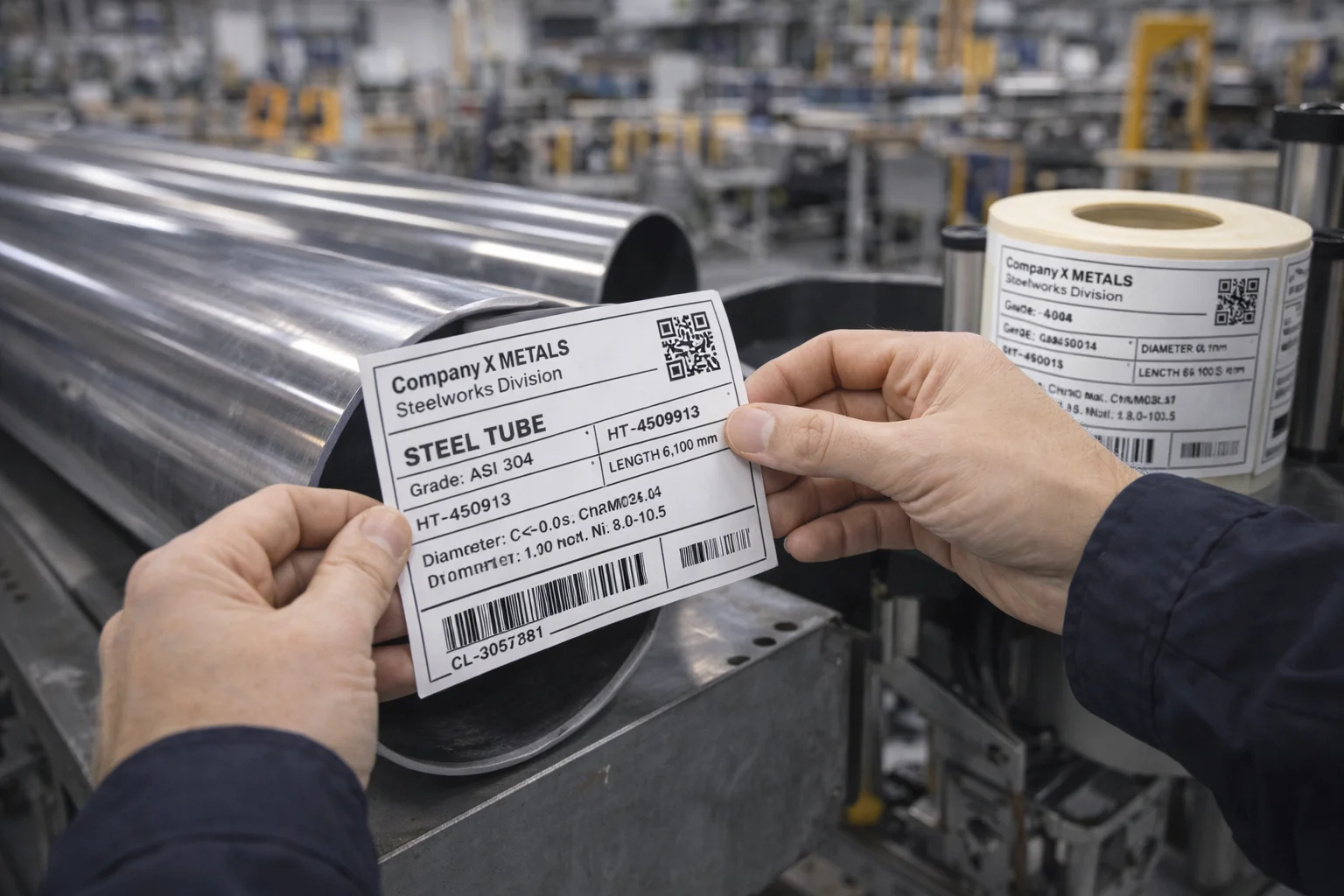
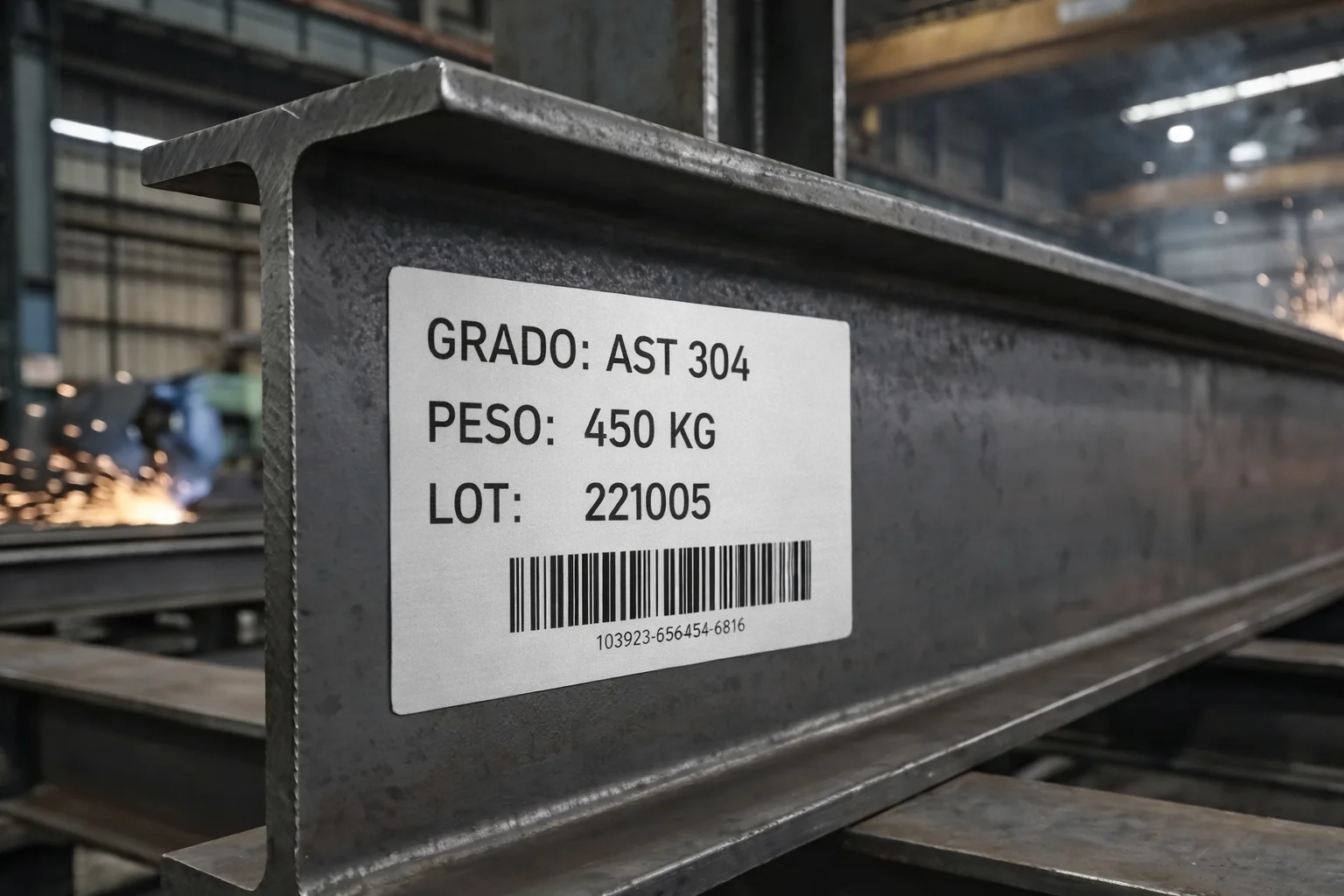
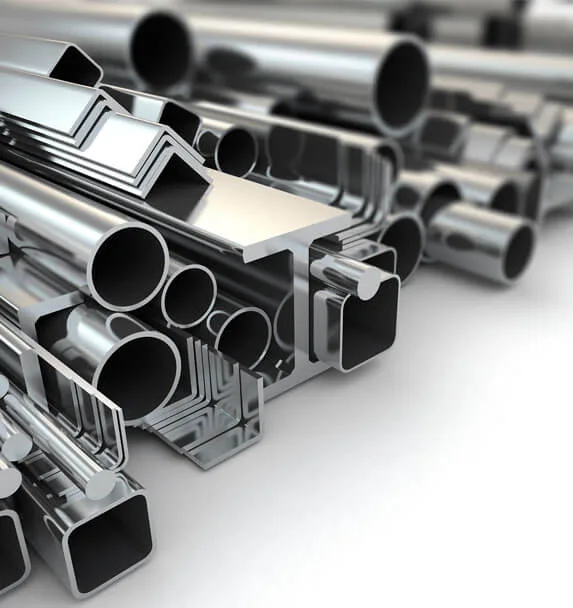
Standard EN 10204 governs the inspection documents for metal products. For heat traceability (types 3.1 and 3.2), each profile, sheet or coil must carry permanent marking that links the physical material to its inspection certificate. Our metals labels include the heat number, steel grade, dimensions, weight and a barcode or DataMatrix code for reading on the shop floor or in the warehouse.
Do labels adhere well to galvanised steel or anodised aluminium?+
Galvanised steel, anodised aluminium and epoxy primer are difficult-to-bond surfaces: low surface energy and irregularities. We use high-tack adhesives for low-energy surfaces and, in some cases, contact or pressure-activated adhesives. It's common to clean the surface before applying the label. Tell us the surface and the environment and we will recommend the right adhesive.
Does the label stay legible after the profile is cut, bent or welded?+
It depends on the process. If the cut or bend passes through the label area, the label will be destroyed along with the material. It's standard practice to place the label on an area of the profile or part that won't be affected by the later process. For welding, if the label is close to the heat source, a heat-resistant material must be used. We define the solution based on the customer's full production flow.
How long can a label last outdoors in industrial conditions?+
In industrial outdoor conditions — UV, rain, humidity, temperature, salty coastal air — an outdoor polyester label can have a service life of 5 to 10 years or more. For permanent metal structures, solutions exist with durability beyond 15–20 years. The material, the adhesive and the print ribbon must be selected together to achieve that durability. In environments with periodic shot blasting, durability depends on the frequency and intensity of the process.
Can you send a sample before production?+
Yes. In metals, where surfaces vary widely and process conditions are demanding, validating before production is essential. Tell us the type of metal, the environment of use, the processes the material goes through after labelling and the label's requirements. We will prepare a sample for you to validate under your real conditions.
Which label withstands contact with machining oils and cutting fluids?+
Machining oil and cutting fluids degrade the adhesive and the print of standard labels: the adhesive edge loosens and the thermal print disappears. For environments with oils and cutting fluid we use high-cohesion adhesives and resin ribbon that keep the print sealed against lubricants. We always recommend validating with a sample in the real environment before production.
Do you label wire rod, billets and other semi-finished steelworks products?+
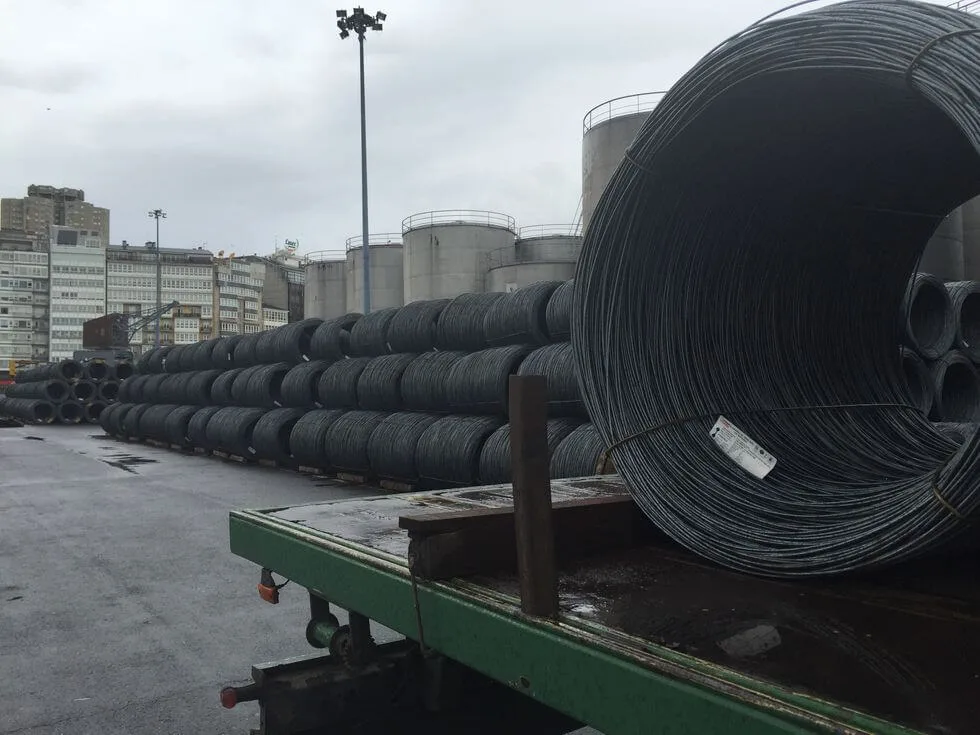
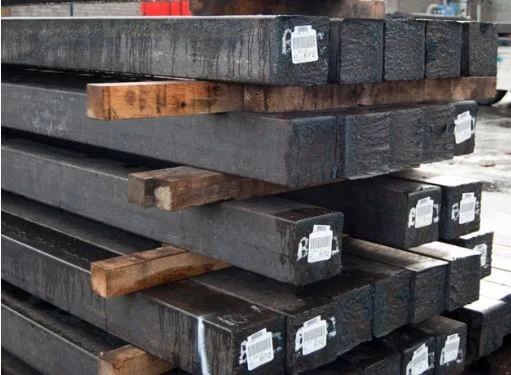
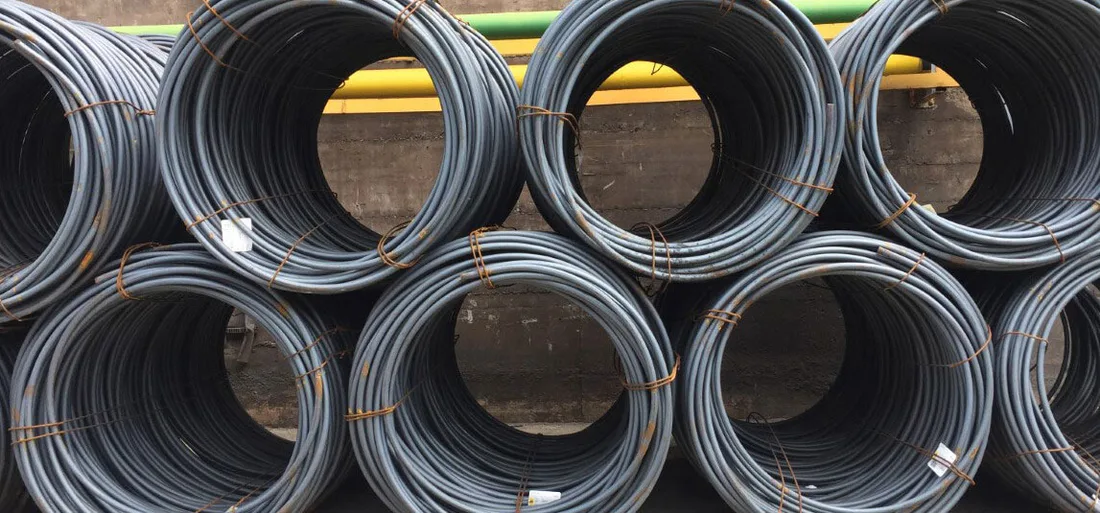
Yes. For wire rod coils and billets we work with reinforced polyester and high-cohesion adhesives that hold adhesion on hot-rolled or pickled surfaces. The label withstands prolonged outdoor storage and handling with a crane, overhead hoist or grab. For semi-finished products that go through a furnace or later thermal cycle, we select specific high-temperature materials.
What label should be used on prefabricated rebar assemblies and ribbed reinforcing bar on site?+
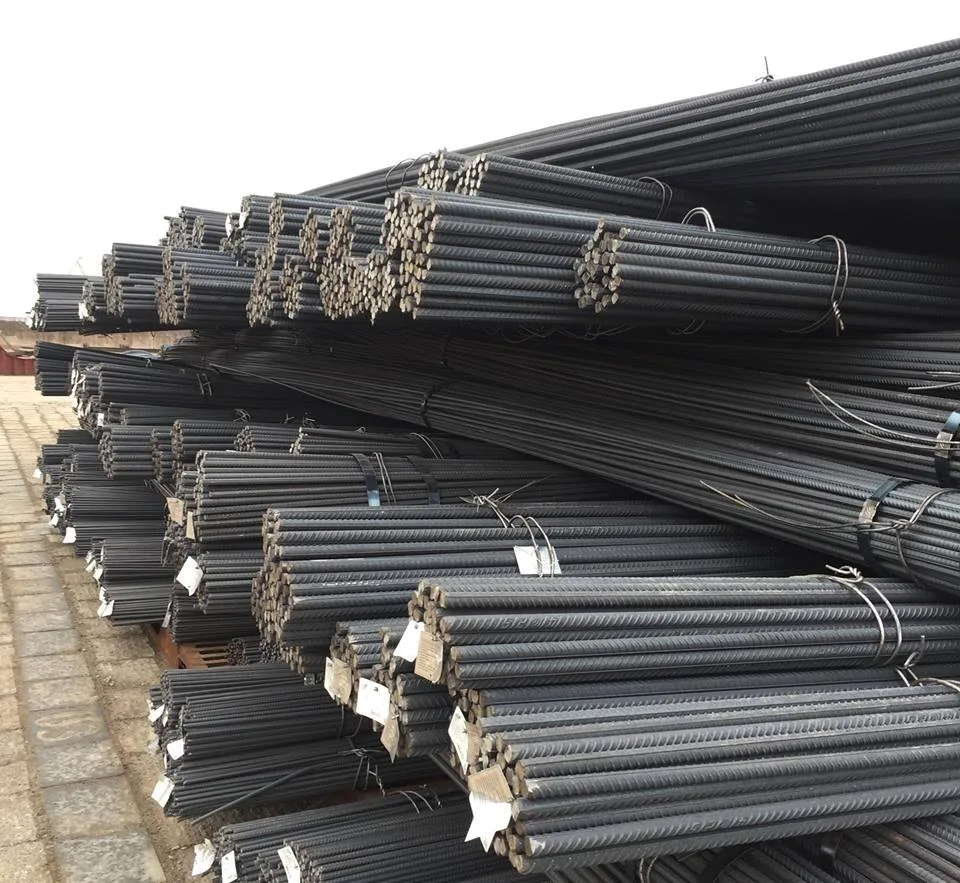
Prefabricated rebar assemblies and ribbed reinforcing bar (B500S, B500T) are transported, stored on site and left outdoors for weeks or months before installation. We recommend outdoor polyester with a high-tack adhesive for ribbed and oxidised steel, and resin ribbon so the code stays legible after rain, sun and handling. The label links the batch to the rebar assembly position and the destination site.
How do you identify steel bars, rods and sheets under EN 10204?+
Each bar, rod or sheet is identified with a label that includes the heat number, steel grade, dimensions, weight and a barcode or DataMatrix code. The label links the physical material to its 3.1 or 3.2 inspection certificate and is designed to remain legible after handling, outdoor storage and later processes such as cutting, bending or pickling.