Lockout/tagout (LOTO) solutions
Safety padlocks, lockout devices for valves, circuit breakers, plugs and controls, lockout hasps, tags, lock boxes, stations and kits. 198 products and 490 references to isolate the energy of machines and installations during maintenance.
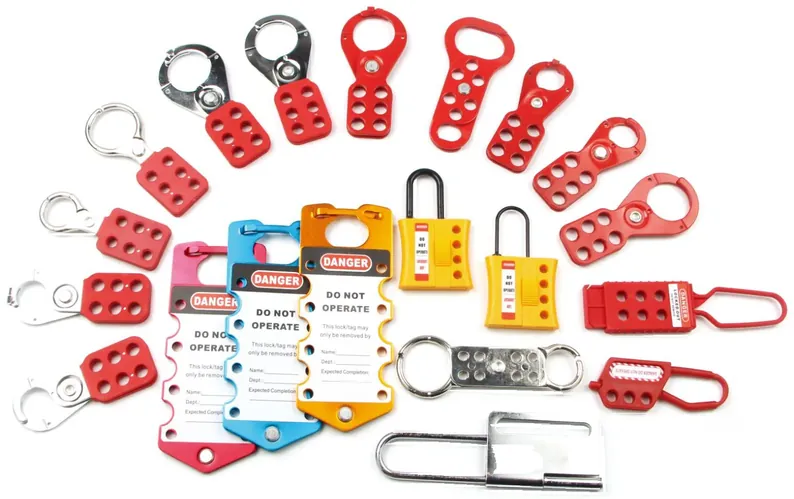
LOTO catalogue
Nine product families
Category 01
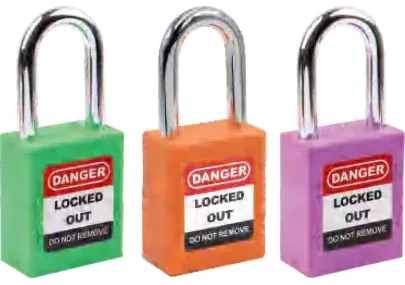
Safety padlocks
Safety padlocks for lockout/tagout (LOTO), with a reinforced nylon body and a steel, stainless steel, insulating nylon or cable shackle. Available in different shackle lengths, body shapes and eleven colours, with keyed alike, keyed different, master key and grand master key systems.
24 products · 166 references
See category →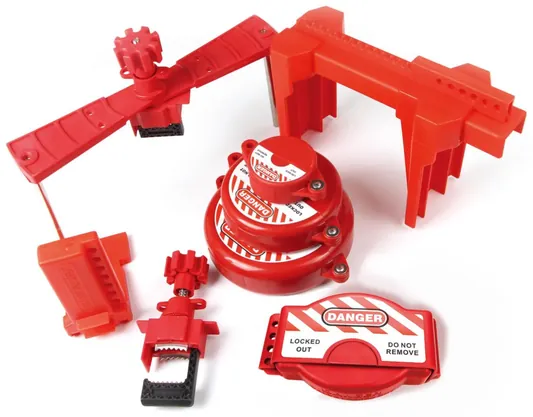
Category 02
Valve lockouts
Lockout devices for ball, gate, butterfly, diaphragm and flanged valves, in standard, adjustable and universal versions. They prevent the handle or handwheel from being operated during maintenance work and accept one or more safety padlocks.
22 products · 61 references
See category →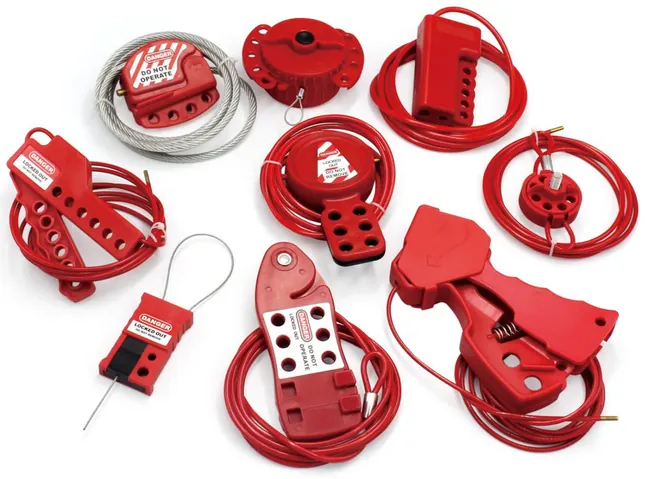
Category 03
Cable lockouts
Cable lockout devices for isolating valves, disconnect switches and other energy isolation points that are difficult to secure. The coated steel cable is threaded through the point to be locked out and tensioned in the body, which accepts one or more safety padlocks. Available with an adjustable cable, self-retracting cable, plastic head or as a security seal.
13 products · 21 references
See category →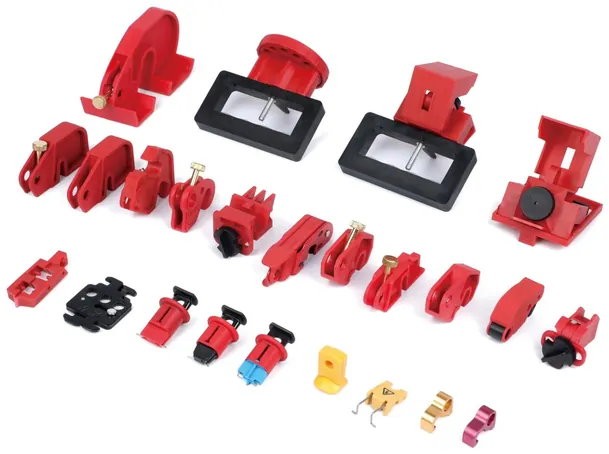
Category 04
Circuit breaker lockouts
Lockout devices for miniature circuit breakers (MCB), moulded case circuit breakers (MCCB) and other automatic switches. They prevent the toggle from being operated during maintenance work; they fit without tools or with a small screwdriver and accept a safety padlock. “Pin-out”, “pin-in”, “tie-bar”, clamp-type and clamp-on models, plus combined sets.
38 products · 48 references
See category →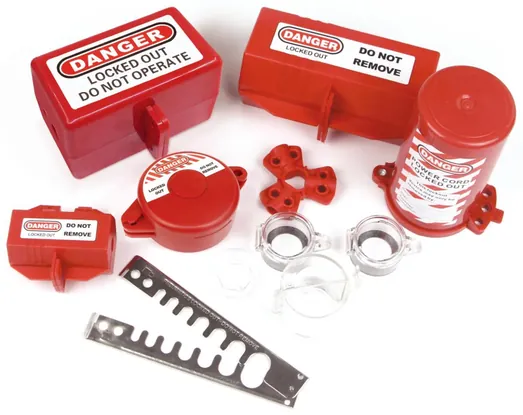
Category 05
Pneumatic and electrical lockouts
Devices for isolating pneumatic and electrical energy sources during maintenance: lockouts for fittings and air outlets, lockouts for industrial plugs and connectors, covers for emergency stop buttons and push buttons, lockouts for wall switches and disconnect switches, lockout bags and lockouts for electrical panels. All accept safety padlocks and, in most cases, several padlocks at once.
27 products · 47 references
See category →Category 06
Lockout hasps
Lockout hasps allow several workers to lock out the same energy isolation point: the equipment cannot be restarted until the last worker removes their padlock. Available in steel, aluminium, zinc alloy and non-conductive nylon, with 1“ (25 mm) and 1.5” (38 mm) jaws and capacity for up to 24 padlocks.
16 products · 26 references
See category →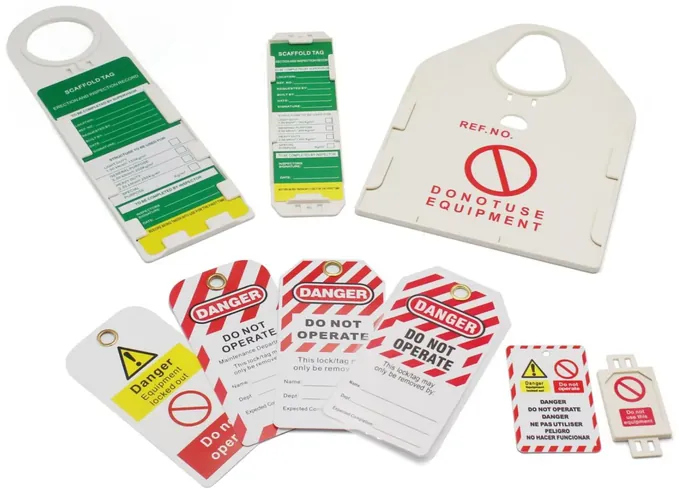
Category 07
Lockout tags
Lockout tags identify the person responsible for fitting the lockout device and the person authorised to remove it. The range includes PVC warning tags, customisable card-type identification tags and ABS scaffold tag holders, with customisable wording.
4 products · 9 references
See category →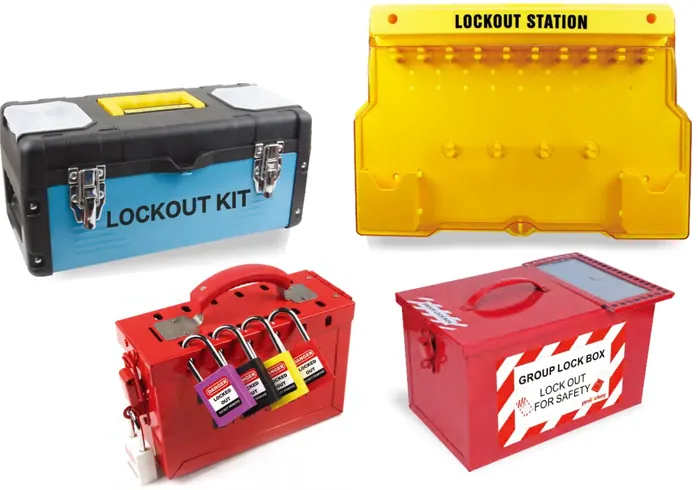
Category 08
Lock boxes and lockout stations
Group lock boxes, portable boxes and lockout stations, in painted sheet steel or engineering plastic (ABS, PC, acrylic). They centralise padlocks, hasps, tags and mini lockout devices and enable group lockout: each worker fits their own padlock to the box holding the keys to the isolation points. Portable, wall-mounted and high-capacity station versions are available, with the option of customising sizes, colours and panels.
35 products · 93 references
See category →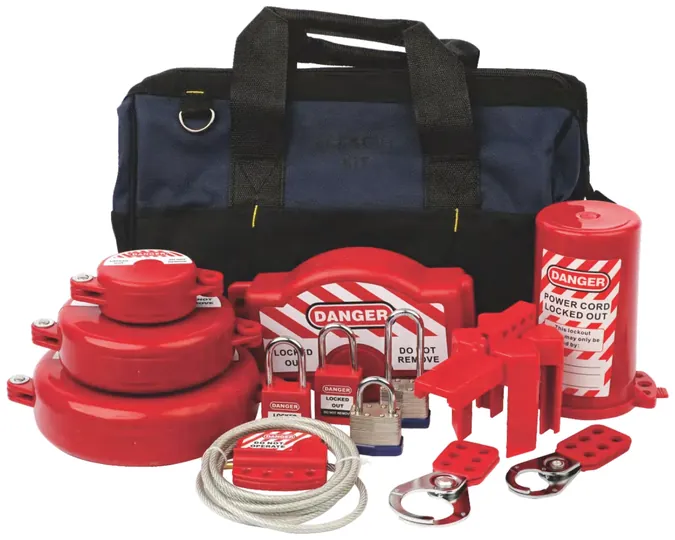
Category 09
Lockout kits
Ready-to-use lockout kits, consisting of a lockout station, box or bag with a selection of safety padlocks, lockout hasps, tags and electrical, mechanical and valve lockout devices. Each kit is supplied with the contents listed; the composition can be adapted on request.
19 products · 19 references
See category →What is LOTO
Lockout and tagout of hazardous energies
LOTO (Lockout/Tagout) is the procedure that ensures a machine or installation is isolated from all its energy sources before any maintenance, cleaning or adjustment work, and that it cannot be restarted until the last person working on it removes their lock.
Lockout is carried out with mechanical devices (valve, circuit breaker, plug and cable lockouts) that prevent the isolating device from being operated, secured with a safety padlock whose key is held only by the worker. The tag identifies who applied the lockout, when and why. When several people are involved, lockout hasps and group lock boxes allow each of them to apply their own padlock.
In the European Union, the duty to isolate work equipment before maintenance derives from Framework Directive 89/391/EEC and Directive 2009/104/EC on the use of work equipment, transposed into national law in each Member State; the standards EN ISO 12100 and EN ISO 14118 (prevention of unexpected start-up) describe the technical principles. The most widely used international reference is the US standard OSHA 29 CFR 1910.147.
Procedure
The 8 steps of a lockout
How to order
Keying systems and customisation
Each product is identified by its reference. For padlocks, the reference prefix indicates the keying system; all other devices are ordered by reference and quantity. Tell us about your installation and we will propose the appropriate configuration.
KD — Keyed different
Each padlock has its own key; this is the basic system for personal padlocks. Up to 50,000 different combinations.
KA — Keyed alike
All padlocks in a group open with the same key. Useful for one worker or team with several lockout points.
MK — Master key
Each padlock with its own key (or in KA groups), plus a master key that opens all padlocks in the system. For maintenance or safety managers.
GMK — Grand master key
Several master key systems under one grand master key that opens them all. For large plants with several areas.
Key combinations on record
On request, the combinations of each order are recorded so that you can replace padlocks or identical keys whenever you need to.
Customisation
Laser marking of your logo on the body, numbering of keys and padlocks, warning tags in your language and colours by area or department.
Frequently asked questions
Common questions about LOTO
What is the difference between a LOTO safety padlock and a conventional padlock?
A safety padlock has a nylon body (insulating, lightweight, resistant to chemicals and temperature), a steel, stainless steel or non-conductive nylon shackle, key retention (the key cannot be removed while the shackle is open) and a cylinder that accepts master key systems. It is also supplied in colours and with a warning label, and each worker has their own: it is a personal padlock, not one for locking up premises.
How many padlocks do I need?
At least one per person who may work on locked-out equipment, plus those needed for isolation points that are locked out permanently or on a shared basis (group lock boxes). A single worker usually carries several keyed alike (KA) padlocks.
What is a lockout hasp?
It is a device with several holes (usually 6) that closes over the lockout point and allows each worker to apply their own padlock. The equipment cannot be re-energised until the last padlock is removed.
Do circuit breaker lockouts fit any breaker?
No: there are models for miniature circuit breakers (MCB) with standard, wide or holed toggles, for moulded case circuit breakers (MCCB) and universal clamp types. Each data sheet states the toggle type and the range of dimensions; if in doubt, send us a photo or the breaker model.
Can I have my logo or numbering on the padlocks?
Yes. On request, the logo and the body and key numbering are laser-marked, and the warning labels are customised in your language.
How do I order replacement keys?
If the order was recorded with your keying system, give us the reference and key number and we will supply keys or padlocks with the same combination.
LOTO supply
Reply within 24 h
Quote with references, lead time and keying configuration.
Custom keying systems
Keyed different (KD), keyed alike (KA), master key (MK) and grand master key (GMK); key combinations kept on record for replacements.
Customisation
Laser marking of your logo, numbering of keys and padlock bodies, tags in your language.
Shipping throughout Europe
We supply the whole European Union from Sabadell (Barcelona).
Starting or extending your LOTO programme?
Please tell us the type of installation, the number of lockout points and how many people are involved. We will propose the devices and keying system and send you a quote.
Reply within 24 hours.
- Advice on the keying system and the appropriate configuration.
- Quote by reference and quantity, with no obligation.
- Full catalogue available for download as PDF.