Lit-Off Desarrollo

Material for printing without ribbon

Labels for thermal printers: no ribbon, fast and economical

With direct thermal you do not need a print ribbon: the label prints on its own with the heat of the printhead. A fast, low cost-per-label system for high-volume labelling, common in warehouses, logistics operators and short-cycle food companies.

Temperature

Up to +60 °C

Moisture resist.

Low

Printing

Direct thermal

Ribbon

Not required

Common applications

  • Short-cycle dispatch and logistics in dry indoor conditions.
  • Product, price and picking labelling in warehouses.
  • Standard food labelling with no exposure to moisture or UV.
  • Traceability and batches in distribution and point of sale.

Compatible adhesives

Standard permanent acrylic for logistics and indoor use; removable for price or promotional labelling; hot-melt for recycled cardboard; a formulation for frozen goods with application from −10 °C and service down to −20 °C on direct thermal PP.

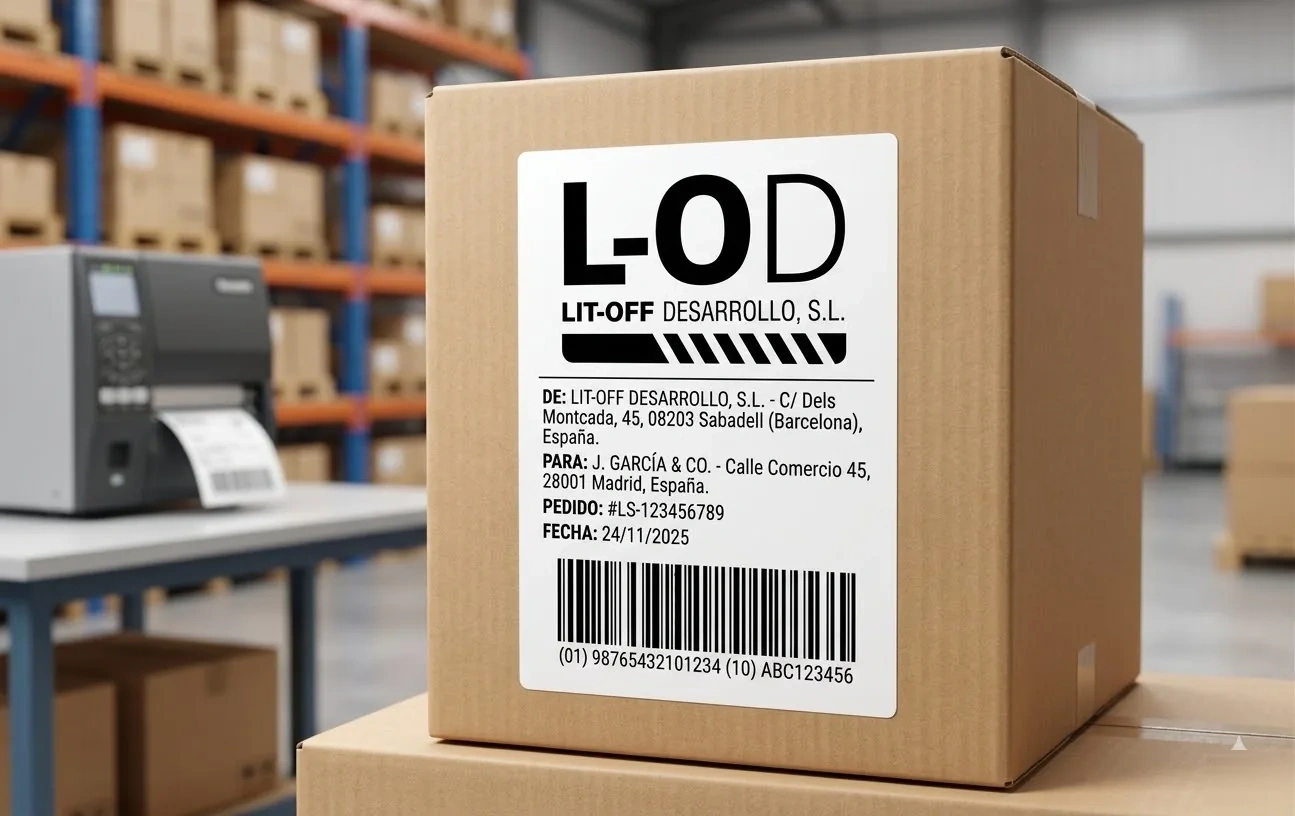
Direct thermal printing label for box and logistics

Material variants

Standard ECOHigh sensitivitySynthetic PPFood-grade
  • Standard ECO: general logistics use, minimum cost per label, service life of 6 to 12 months indoors depending on exposure.
  • High sensitivity: optimised for high speeds or low-energy printheads.
  • Synthetic PP: basic moisture resistance with no ribbon; a lightweight alternative to coated paper.
  • Food-grade: built for indirect food contact (food regulations).

Need higher image definition or more durability?

For higher print quality or a service life of 2+ years, coated paper with ribbon or polyester are the right alternatives.

See coated paper labels →

Selection criteria

When direct thermal suits and when it does not

Direct thermal is not always the most suitable option. Its advantage lies in operational simplicity and the ribbon saving. Its limit lies in durability and resistance to external agents.

When to choose it

  • Short use cycles: dispatch, logistics, distribution and point of sale.
  • You want to remove the ribbon and simplify the printing operation.
  • High volumes where cost per label is a relevant factor.
  • Indoor environments with no prolonged exposure to UV, heat or abrasion.

When not to choose it

  • The label must maintain documented readability for more than 12–18 months.
  • Continuous exposure to heat, direct UV light or heavy friction.
  • Contact with chemical products, oils or solvents.
  • Long-term identification of fixed assets or industrial equipment.

Material alternatives

  • PolyesterPermanence, chemical resistance and a wider temperature range.
  • PolypropyleneFlexibility and moisture resistance with a good cost balance.
  • Labels for ovens and curingIf the process exceeds 150 °C or requires extreme industrial conditions.

Common applications

Common sectors for direct thermal labelling

Direct thermal handles well any application where the label has a short lifespan and print speed is a factor: logistics, food, retail and healthcare.

Sector

Logistics and warehousing

Logistics is the natural home of direct thermal: dispatch labels, delivery notes and barcodes printed the moment they are needed, with no ribbon and at high speed. The label's short lifespan matches the transitory nature of the shipment.

  • Dispatch labels and delivery notes at loading docks.
  • Barcodes and QR codes for picking and internal traceability.
  • Labelling of pallets and parcels in distribution warehouses.
See logistics sector

Sector

Retail and point of sale

In retail, restocking speed and cost per label are decisive. Direct thermal lets you print price labels, internal codes and campaign marking at the exact time and quantity needed, with no additional consumables.

  • Price labels for POS displays and shelf lines.
  • Restocking labels with internal barcode.
  • Fast marking for campaigns, discounts and one-off promotions.

Sector

Food and distribution

On food packaging and distribution lines the label serves a traceability function: expiry date, batch number and product code. Direct thermal in a format compatible with cold rooms covers most short-cycle needs.

  • Date and batch labels on packaging lines.
  • Marking of boxes and pallets in distribution and logistics platforms.
  • Labels for refrigeration chambers in short-cycle applications.
See food sector

Sector

Healthcare and laboratories

In healthcare, direct thermal is used for sample identification, patient wristbands and labelling of clinical material with a short lifespan. Printing at the point of care — with no need for ribbon — cuts preparation time and the risk of error.

  • Labelling of samples and tubes in analysis laboratories.
  • Patient wristbands printable at the point of care.
  • Identification of trays, clinical material and prescriptions in consultation rooms.

Technical comparison

Direct thermal versus thermal transfer

FeatureDirect thermalThermal transfer
Consumable neededLabel onlyLabel + ribbon
Operating costLow — ribbon savingMedium / high
Image durabilityLimited — sensitive to light and heatHigh — resistant
Print speedVery highHigh
Common applicationLogistics / Distribution / RetailPermanent identification

Material data sheets

Technical specifications by substrate

Standard thermal paper covers most logistics applications; protected paper, synthetic PP and special solutions respond to environments with moisture, mechanical demands or specific format requirements.

Standard Thermal Paper

Most economical

The reference choice for dispatch labels, tickets and short-duration delivery notes. High thermal sensitivity for fast printing. No protective coating; designed for indoor use with limited exposure.

Image durability

6–9 months indoors

Moisture resist.

Low

Printing

Direct thermal

Format

Rolls / Zig-zag

Common applications

  • Dispatch and logistics labels in indoor environments.
  • Weighing tickets, receipts and price labels at point of sale.
  • Identification of parcels and boxes in warehouses with a short lifespan.

Protected Thermal Paper

Top Coat

Incorporates a top layer (Top Coat) that protects the thermal image against moisture, grease and light abrasion. Extends the print's service life and allows use in refrigeration and food distribution environments.

Image durability

Extended

Moisture resist.

Medium-high

Printing

Direct thermal

Format

Rolls / Zig-zag

Common applications

  • Labelling of fresh food products and cold rooms.
  • Parcel dispatch with exposure to moisture or mild outdoor conditions.
  • Environments with frequent handling requiring greater rub resistance.

Direct Thermal PP

Synthetic

Synthetic polypropylene substrate with a heat-sensitive layer. Highly tear-resistant and waterproof. Combines the convenience of direct thermal with the durability of a synthetic material suited to industrial environments.

Temperature

-20 °C to +60 °C

Moisture resist.

High

Printing

Direct thermal

Material

Synthetic PP

Common applications

  • Humid warehouses, cold rooms and process plants with water.
  • Identification of containers, drums and packaging with frequent water exposure.
  • Industrial environments where paper —even protected— would not be enough.

Special Solutions

Custom-made

Special configurations on a direct thermal base: removable adhesives for temporary labelling, high-adhesion adhesives for difficult surfaces, technical-colour face materials and zig-zag format for high-speed industrial printers.

Adhesive

Removable / High adh.

Face colour

White / Technical

Printing

Direct thermal

Format

Roll / Zig-zag

Common applications

  • Temporary labelling in production or quality control (removable adhesive).
  • Applications requiring background colour or colour codes by zone.
  • High-speed industrial printers with zig-zag feed.

Supply formats

How we supply the material

We adapt the format to the printing system and the working environment. The three main formats cover the full range of industrial and desktop applications.

Format 01

Die-cut rolls

Die-cut labels on liner, wound onto a roll. Compatible with industrial and desktop printers. Available with 25, 40 and 76 mm cores and outer diameters up to 200 mm.

  • With or without detection gap
  • With or without black mark
  • The most common format on production lines

Format 02

Continuous roll

Roll material with no die-cut, for printers that cut or dispense to size. Ideal for variable-length tickets, delivery notes and product labels with non-standard length.

  • No black mark or with mark on request
  • Variable length per print
  • Compatible with automatic cutter

Format 03

Fanfold

Die-cut or continuous material folded in a zig-zag. Allows loading large volumes without changing the roll, reducing stoppages in high-production systems and automated lines.

  • Up to 5,000 labels per box
  • No core — space saving
  • Preferred on picking lines

Frequently asked questions

What people ask us about direct thermal

Answers to the most frequent questions before requesting a sample or a quote.

Do I really not need a ribbon for these labels?+

Correct. The substrate already incorporates the chemistry needed to react to the heat of the printhead. This removes the cost and the changeover time of the ribbon, simplifying the printing operation.

How long does the print last? Does light or heat affect it?+
  • Standard paperUnder normal indoor warehouse conditions, around 12 months. Heat, intense light and moisture shorten it.
  • Top Coat1–3 years under normal indoor warehouse conditions. Better resistance to moisture, grease and light abrasion.
  • Synthetic PPEven greater durability, suitable for humid environments or frequent handling.
  • DegradationHeat, UV light and grease are the main risk factors in any variant.
Can I print in colour with direct thermal?+

Thermal printing produces a black image. If you need to include colour — logo, corporate background or identification stripes — it is possible to combine a pre-printed colour base with the thermal zone for variable data. Ask us which option best suits your volume.

Which sectors use direct thermal most often?+

It is the predominant solution in logistics and parcel delivery, retail and point of sale, fresh food and distribution, and any application where the label has a short lifespan and print volume is high.

What is the minimum order quantity?+

We work with both small runs and large-volume production. The minimum quantity depends on the format, the material and the printing system. Contact us with the details of your project and we will guide you.

Do direct thermal labels work in the cold chain and deep freeze?+

Standard thermal paper can lose adhesion in intense cold due to condensation. For cold chain down to −20 °C we recommend direct thermal PP with permanent acrylic adhesive formulated for cold surfaces. For warehouses at positive temperature, standard paper is usually enough.

Which printers are these labels compatible with?+

They are compatible with any direct thermal printer from the usual brands (Zebra, Honeywell, SATO, Datamax, TSC). The key factor is calibrating the roll format and the material's sensitivity to the thermal profile of each printhead. We will guide you on the configuration according to the printer model you use.

Do you have thermal paper without BPA (Bisphenol A)?+

Yes. We stock direct thermal substrates free of BPA, formulated with alternative developers. They are the right choice when regulation or the customer's internal policy requires materials with no bisphenol compounds, as in food, pharmaceuticals or applications in contact with people.

Why does the label fade if I rub it or touch it with my fingers?+

Direct thermal labels are sensitive to heat and grease. The heat from fingers can activate the coating and smudge the image. For environments with frequent handling or heat exposure, protected thermal paper or thermal transfer with ribbon are more suitable.

Can I use these labels for batch traceability with a scanner?+

Yes, as long as the time in use does not exceed the material's durability. For short-term indoor warehouse traceability, direct thermal works well. For long-term or outdoor traceability, thermal transfer with ribbon offers more guarantees of readability.
Contact

Need guidance on direct thermal?

Tell us the use, the volume and the end environment. We will guide you to the most suitable substrate and adhesive from the first contact.

  • No-obligation technical advice.
  • Response within 24 hours.
  • Material samples when the project requires it.
Please enter your company name.
Please enter your name.
Enter a valid email address.
Please write your message.
You must accept the privacy policy to continue.