Lit-Off Desarrollo

Industrial sector

Labels for the wood industry

Labels for wood: adhere to porous surfaces and withstand the outdoors

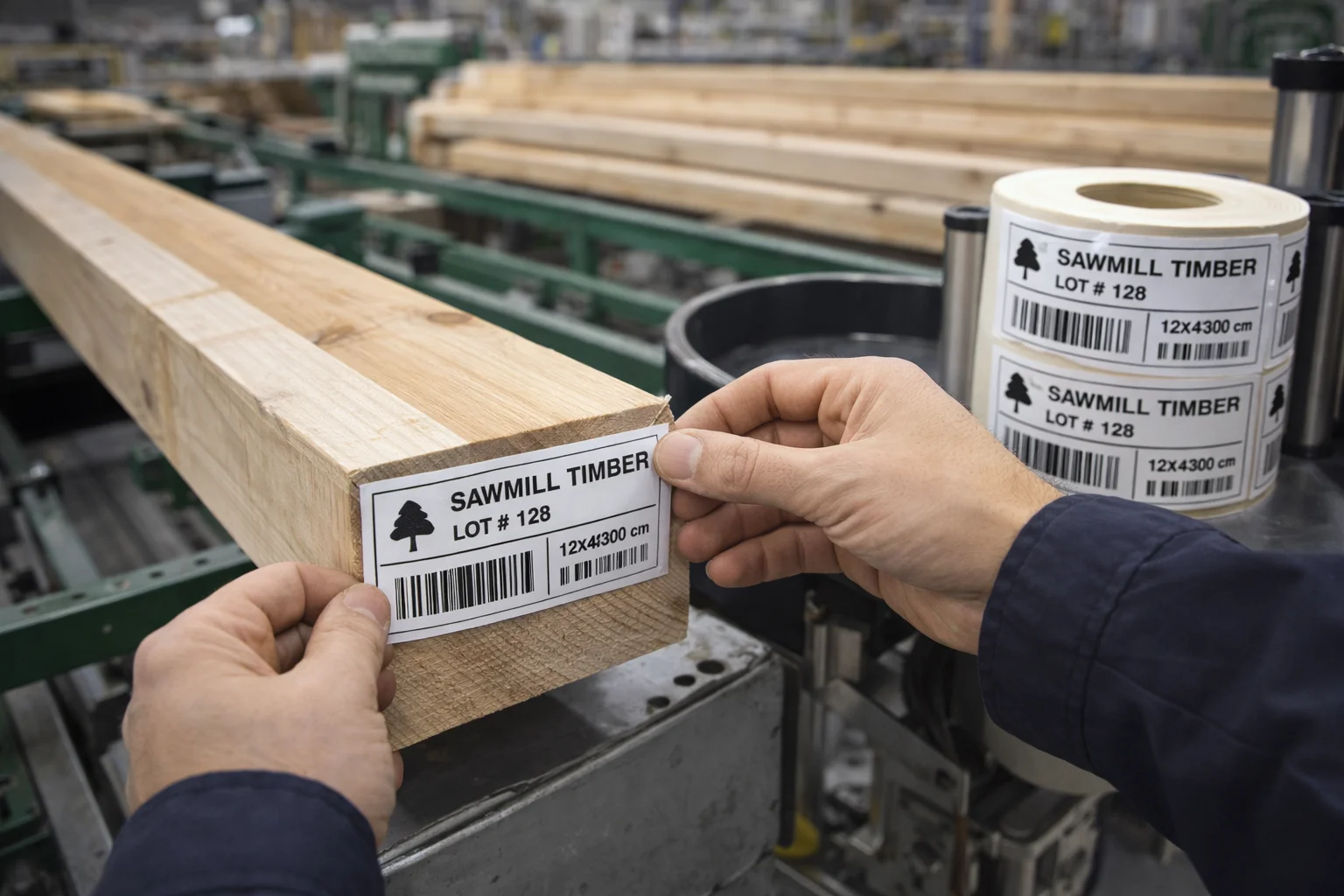
We supply resistant self-adhesive labels for the wood industry: they adhere to porous, rough or oily surfaces and withstand outdoor UV and maritime transit, with ISPM-15 traceability for export. When adhesive isn't viable, we supply hang tags fixed with staples, straps or wire for pallets, boards and packages. We have supplied sawmills and wood processors across Spain and Europe since 1994.

Temperature

−10 °C to +60 °C

Standard

ISPM-15

Resistance

UV · Humidity · Tearing

Traceability

Batch · Origin

Main applications

  • Self-adhesive labelling for boards, panels and sheets in outdoor storage.
  • Hang tags for pallets and packages with staples or straps.
  • Batch and origin traceability for export under ISPM-15.
  • Product identification in containers for maritime transit.
  • Labels on wood treated with oils, varnishes or protectors.
Industrial labels for the wood industry

Common materials in wood

  • Hang tags: adhesive-free, fixed with staples, straps or wire. In PP, PE or PET depending on the mechanical resistance and environmental exposure required.
  • UV polypropylene: a synthetic material with UV stabilisers for prolonged outdoor storage.
  • Polyester: resistant to humidity, UV and temperature changes; recommended for maritime transit and prolonged outdoor storage.

Treated wood or outdoor storage?

Tell us the type of wood, the surface treatment, the storage conditions and whether the product is exported. We will guide you from the first contact.

Ask about the wood industry →

Environment and technical requirements

Conditions of use in the wood industry

In wood, the label faces a difficult substrate — porous, rough, variable — and storage conditions that include prolonged UV exposure, changes in humidity and temperature, and intense mechanical handling. The adhesive and material must be selected to withstand the whole journey from the sawmill to the end customer.

Common conditions of use

  • Porous, irregular or treated surfaces with varnish, oil or wood protector that reduce the surface energy available for adhesion.
  • Prolonged storage outdoors with direct UV exposure and variations in temperature and humidity over weeks or months.
  • Maritime container transit with high relative humidity and sudden temperature changes between origin and destination.
  • Intense mechanical handling: forklifts, conveyor belts and palletising processes that put the label under tension and tearing.

Technical requirements and regulations

  • Traceability of batches and certified origins under ISPM-15 regulations for international phytosanitary export.
  • Resistance to mechanical tearing during handling with forklifts and conveyor belts: the material cannot rip or come loose while goods are being moved.
  • Legibility of the barcode or QR code after 30 or more days of environmental exposure, from the sawmill to the customer's receiving point.
  • For hang tags: tensile strength at the perforation or mechanical fixing point, without breaking under the weight of the package itself.
In wood, the challenge isn't just the material's resistance: it's getting the adhesive to work on a surface that changes with humidity, treatment and time. Validating with a real sample before production is essential.
Labelling applications in the wood sector

Where our labels are used

From the freshly cut board at the sawmill to the pallet crossing the ocean in a container, the label is the only piece of information that travels with the product throughout its journey.

Specific applications

Where our labels are used

Self-adhesive labelling on boards, panels and sheets

Wood boards and panels stored outdoors require labels with high-cohesion adhesives that penetrate the porosity of the substrate and withstand UV exposure without yellowing or losing adhesion. The print must keep the code legible after weeks of sun and rain.

UV polypropylene · High-cohesion adhesive · Outdoor

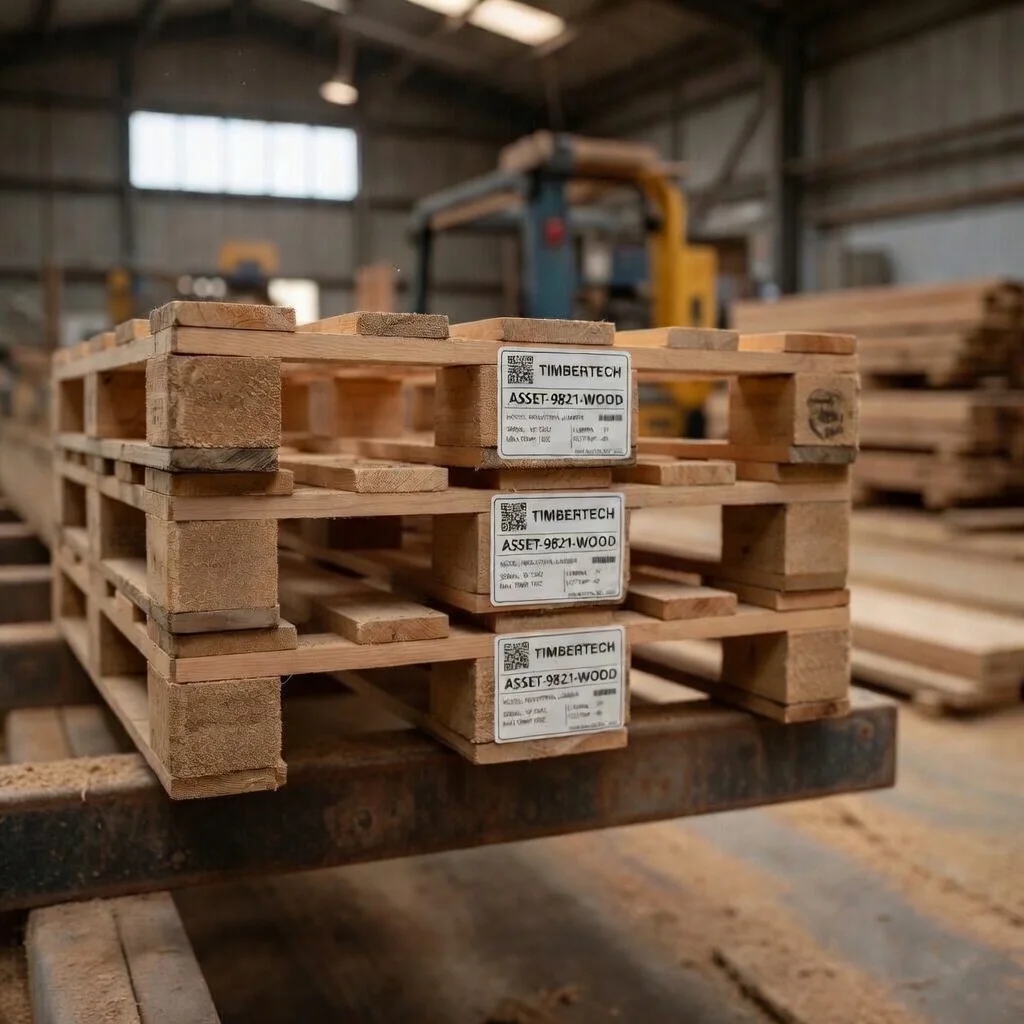
Hang tags for pallets and packages

For pallets and packages where the surface isn't suited to adhesives, hang tags with mechanical fixing (staples, straps or wire) are the standard solution. The material must resist tearing at the fixing point and keep the code legible during forklift handling and storage.

Tear-resistant paper · Synthetic · Mechanical fixing

Batch and origin traceability for export

Exporting wood requires documenting the batch, the origin and the phytosanitary treatment under ISPM-15 regulations. Traceability labels must be legible throughout international transit, including the sea crossing in a container with high relative humidity.

ISPM-15 · Traceability · Maritime transit

Labelling on wood treated with oils and varnishes

Wood treated with oils, varnishes or protectors has very low surface energy, which makes adhesion of standard labels difficult. For these surfaces we use aggressive adhesives specifically formulated for low-energy substrates, with prior validation on a sample of the customer's actual material.

Aggressive adhesive · Low surface energy · Validation

Recommended materials

The wood's surface determines the material

There is no universal adhesive for wood. Porosity, surface treatment, storage conditions and whether the product is exported by sea all shape the choice. We help guide the solution from the first contact.

01

Outdoor storage

UV Polypropylene

A synthetic material with UV stabilisers for labels that will stay exposed to sun and rain for weeks. It doesn't yellow, doesn't become brittle and keeps the code legible under prolonged outdoor storage conditions.

  • Resistant to solar UV degradation.
  • Doesn't yellow or become brittle outdoors.
  • Resistant to ambient humidity and rain.
  • Compatible with high-cohesion adhesives for wood.
02

High cohesion

Adhesives for wood Porous and treated

For porous, rough surfaces or those treated with products that reduce the available surface energy. High-cohesion adhesives penetrate the substrate's irregularity and create a mechanical anchor that standard adhesives can't achieve on wood.

  • Adhesion on low-surface-energy substrates.
  • Penetration into porous, irregular surfaces.
  • Keeps its adhesion under changes in ambient humidity.
  • Mandatory validation on a sample of real wood.
03

Mechanical fixing

Hang tags Adhesive-free

For pallets and packages where the surface doesn't allow adhesive — oiled, rough or repellent-treated wood. In PP, PE or PET depending on the mechanical resistance and environmental exposure required. The material must withstand tearing at the fixing point and handling throughout storage and transport.

  • High resistance to tearing and tension.
  • Resistant to ambient humidity without losing rigidity.
  • Perforated for fixing with a staple, strap or wire.
  • Compatible with barcode and text printing.

Sector needs and environments

Common applications in the wood industry

In wood, the main challenge is the surface: porous, irregular or treated with oils and varnishes that repel conventional adhesives. These are the sector's most common needs.

Application

Labels for outdoor and weathering

Boards, pallets and forestry products stored or transported outdoors for weeks or months. The label must withstand rain, sun, sudden temperature changes and maritime transport.

  • Resistance to UV, rain and extreme temperature swings.
  • Adhesion on treated, damp wood or wood with variable porosity.

Application

Traceability and stock control

Identification of batches, references and units during manufacturing, storage and distribution. Includes labelling for ISPM-15 phytosanitary traceability on wood destined for export.

  • 1D barcodes and DataMatrix codes legible in warehouse environments.
  • Variable data: reference, batch, m², weight and destination.

Application

Hang tags for boards and pallets

Adhesive-free identification for wood treated with repellent oils or varnishes where adhesive won't stick. Hang tags offer a reliable alternative for identification in the warehouse and at dispatch.

  • No adhesive: hang from the product with a cable, strap or ring.
  • Printing of variable data, barcode and text.

Regulations and sector requirements

Regulations applicable in the wood industry

The export of wood and wood packaging is governed by international phytosanitary regulations. Traceability labels are part of the compliance record and must remain legible throughout transit.

ISPM-15

Phytosanitary export

The ISPM-15 International Standard for Phytosanitary Measures governs the treatment of wood packaging material used in international trade to prevent the spread of pests and diseases. It requires HT (heat) or MB (methyl bromide) treatment and a certified, visible mark on the packaging.

  • Applies to pallets, crates and wood packaging in export.
  • Traceability labels must remain legible throughout transit.
  • Mandatory for export to the US, Australia, China and more.

Origin traceability

Chain of custody

Forest certification systems (FSC, PEFC) require chain-of-custody traceability from the forest to the customer. Traceability labels with a barcode or QR code make it possible to document the batch, the origin and the processing operations along the whole chain.

  • Compatible with FSC and PEFC certifications.
  • Barcode or QR code for batch and origin traceability.
  • High legibility throughout the distribution chain.

Mechanical resistance

Industrial handling

Labels in the wood industry face demanding mechanical conditions: rubbing on conveyor belts, tension at the hang tag fixing point, and dragging by forklifts. The material must keep its physical integrity and code legibility through all this handling.

  • High resistance to tearing and surface abrasion.
  • Code legible after intense mechanical handling.
  • The material doesn't tear or come loose during the process.

Outdoor UV resistance

Outdoor storage

Prolonged outdoor storage of wood exposes labels to direct UV radiation, rain, and temperature and humidity variations. Materials with UV stabilisers keep their colour, legibility and adhesion for as long as the product remains in storage before shipping.

  • No yellowing or embrittlement from sun exposure.
  • Code legible after 30+ days of environmental exposure.
  • Resistant to rain and ambient humidity.

Frequently asked questions

What we're asked in the wood industry

Answers to the most frequently asked questions before requesting a sample or quote for a project in the wood sector.

Which adhesive is used to label porous or oil-treated wood?+

Porous wood requires high-cohesion adhesives that penetrate the surface and hold adhesion even on irregular substrates. Surfaces treated with oils, varnishes or protectors further reduce the available surface energy. In these cases we recommend aggressive adhesives formulated for low-energy or difficult surfaces, with a prior test on a sample of the customer's actual wood.

Can you supply hang tags for pallets and boards?+

Yes. Non-adhesive labels for fixing with staples, straps or wire to pallets and boards are very common in the wood industry. We supply labels in PP, PE or PET with a perforation for mechanical fixing. The material must withstand forklift handling, tearing and outdoor exposure during storage.

Which label withstands weeks of outdoor UV exposure?+

Prolonged outdoor storage requires UV-protected polypropylene or synthetic materials with UV stabilisers in the formulation. The material must not yellow, become brittle or lose legibility after weeks of direct sun exposure. The print ribbon must also be UV-resistant to keep the code legible.

What is the ISPM-15 standard and how does it affect wood labelling?+

ISPM-15 (the International Standard for Phytosanitary Measures) governs the treatment of wood packaging material for international export, including wooden pallets and crates. It requires packaging materials to carry the HT/MB mark certifying phytosanitary treatment. The batch and origin traceability labels accompanying the shipment must stay legible throughout transit, including the sea crossing.

Do self-adhesive labels withstand maritime container transit?+

The inside of a shipping container can reach high relative humidity and sudden temperature changes during the crossing. A conventional adhesive can soften or lose tack, and the material can warp. For maritime transit we recommend polypropylene or polyester with moisture-resistant adhesives and, if the surface allows it, validating the solution with an immersion or humidity-cycle test before production.

Can you send a sample before production?+

Yes. In wood, where surface variability is high — porous, treated, rough or with variable moisture — validating the adhesive with a sample on the customer's actual wood before production is the most important step. Tell us the type of wood, the surface treatment if any, the storage conditions and whether the product is exported by sea.

Do the labels keep adhering after repeated wetting and drying outdoors?+

With polypropylene and UV acrylic adhesive, labels keep their adhesion after repeated humidity and drying cycles. On porous or oil-treated wood, surface preparation is key: cleaning and drying time before labelling significantly improve durability.
Direct contact

Request a sample or quote

Tell us the type of wood, the surface treatment and the conditions of use. We will guide you in choosing the material and prepare a sample for validation.

  • • High-wetting adhesives for porous surfaces
  • • Resistant to varnishes, oils and surface treatments
  • • Formats for pallets and hang tags
  • • ISPM-15 compliance for international export
Please enter your company name.
Please enter your name.
Enter a valid email address.
Please write your message.
You must accept the privacy policy to continue.