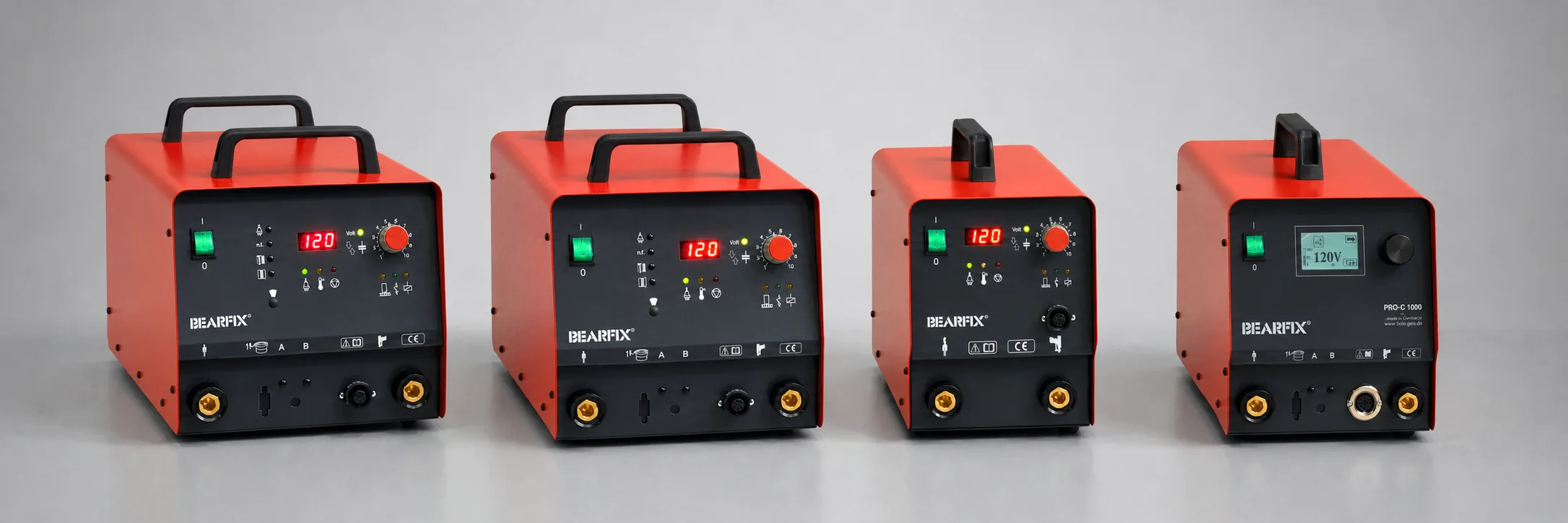
Stud welding is the permanent fixing method for identification systems in environments where adhesive is not viable. Instead of a self-adhesive label, the weld stud is metallurgically bonded to the steel or stainless substrate, and the identification plate, hang tag or carrier is fixed onto it. The process can take between 1 and 3 milliseconds on capacitor discharge equipment, or up to 1,500 milliseconds on ceramic ferrule arc equipment for large-diameter studs. In both cases, the result is a bond that no solvent, temperature or vibration can undo.
When to use stud welding instead of a self-adhesive label
Adhesive is the fastest and most economical solution for the vast majority of industrial identification applications. However, there are situations where it predictably fails, and stud welding exists precisely to cover them.
Surfaces incompatible with adhesive
Surfaces with metal dust, oil, cutting grease or extreme roughness (raw castings, hot-rolled structural plate) do not offer the surface cleanliness an adhesive needs to bond permanently. Even with prior cleaning, recontamination during production can weaken the bond. The weld stud does not depend on surface cleanliness: the weld happens at a metallurgical level, regardless of what is around the anchor point.
High temperature
Adhesives have very different temperature ranges depending on their composition: standard rubber-based adhesives fail below 100 °C; conventional acrylics resist between 100 and 150 °C; special high-temperature adhesives extend that margin significantly. However, they all have a ceiling. In applications with continuous exposure to extreme temperature —industrial ovens, galvanising lines, paint curing, engines in service— there comes a point where any adhesive flows, chars or loses cohesion. The weld stud has no such limit: it withstands the same temperatures as the metal substrate it is bonded to.
Severe vibration and mechanical cycles
Vibration fatigues the adhesive-substrate interface over time. On rotating machinery, compressors, industrial vehicles or structures subject to load cycles, a self-adhesive label can come off before it should. The weld stud removes that dependency: the bond does not degrade through adhesive fatigue because it is not adhesive.
Need to replace identification without damaging the carrier
On long-life assets —machinery, tanks, structures— the identification label needs periodic renewal without affecting the substrate. With a weld stud, the plate or hang tag can be replaced by screwing or unhooking without touching the base part.
Stud welding is permanent and irreversible. The stud is metallurgically bonded to the substrate: it cannot be removed without cutting or grinding. Plan the anchor points before starting the process.
The three stud welding technologies
There are three stud welding methods, each with a different application range. The choice depends mainly on the stud diameter, the substrate thickness and the base material. To learn about the types of consumable studs available, materials and how to specify them, see our dedicated guide.
Capacitor discharge (CD)
This is the fastest technology: the discharge lasts between 1 and 3 milliseconds. During that time, the energy stored in the equipment's capacitors is released through the stud, melting its base simultaneously and creating the bond. Because it is so brief, the heat input is minimal and the heat-affected zone (HAZ) in the substrate is practically invisible. It works on steel, stainless steel, aluminium and brass, with studs from Ø 2 to 10 mm (up to Ø 8 mm on entry-level models). The substrate can be thin —from 0.5 mm thickness— with no risk of deformation or perforation.
Short-cycle arc
The short-cycle arc process creates a brief electric arc —between 40 and 350 ms on entry-level models, up to 950 ms on higher-power ones— that melts both the stud tip and an area of the substrate. As the arc collapses, the stud is pressed against the substrate and the bond solidifies. Penetration is greater than with capacitor discharge, which allows work on thicker substrates and with studs up to Ø 12 mm. The base material must be steel or stainless steel; it is not suitable for aluminium in standard configuration.
Ceramic ferrule arc / Inverter
For the largest diameters —up to Ø 25 mm— the ceramic ferrule arc process is used: a ceramic ring surrounds the stud and confines the arc during welding, protecting the molten zone from environmental contamination and shaping the weld bead. The inverter equipment in this range allows current to be adjusted between 100 A and over 3,000 A with high precision. Welding time can reach 1,500 ms. These are the right units for metal structures, large tanks or castings with thick substrates.
| Technology | Stud diameter | Materials | Welding time | Typical use |
|---|---|---|---|---|
| Capacitor discharge | Ø 2–10 mm | Steel, stainless, Al, brass | 1–3 ms | Thin sheet, general industrial identification |
| Short-cycle arc | Ø 2–12 mm | Steel, stainless | 40–950 ms | Thick substrates, metal construction |
| Ceramic ferrule arc / Inverter | Ø 2–25 mm | Steel, stainless, aluminium | 5–1,500 ms | Large structures, tanks, large-diameter studs |
⚠ Gun–equipment compatibility
Each technology uses specific welding guns that are incompatible with each other. Capacitor discharge equipment uses guns from the PKM / PHM / PIM series; short-cycle arc and ceramic ferrule arc equipment uses PHM-10, PHM-12, PHM-160 or GD-16/22/25. Always confirm the gun you need before purchasing the equipment.
Available models and how to choose the right one
The available equipment is grouped into three clearly differentiated ranges by technology and production level.
LBS range — Capacitor discharge (intensive use)
The LBS range covers everything from entry level to high-output capacitor discharge. The LBS 75 takes studs up to Ø 8 mm with 66,000 µF of capacitance and is the reference model for moderate-volume workshops. The LBS 80 extends the range up to Ø 10 mm. The LBS 90 and LBS 130 models add a charge-inverter board, shorter pause times and the option of an automatic module to connect an automatic stud feeder (VBZ) and an automatic gun: they are the solution for high-cadence production lines.
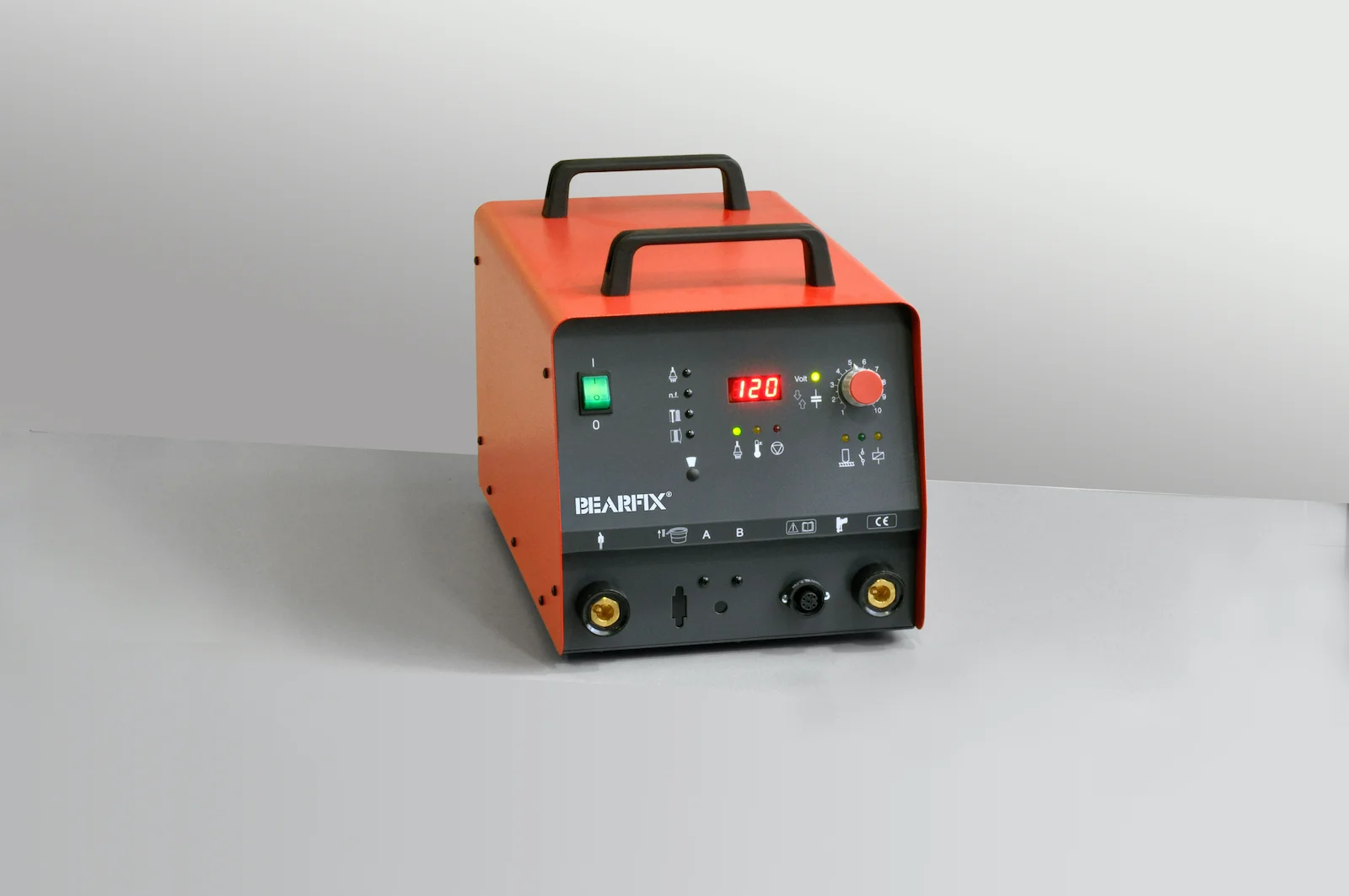
PRO-C range — Capacitor discharge with microprocessor
The PRO-C 1000 and PRO-C 1500 models add microprocessor control, storage of user programs, monitoring of the last 10 welds (24,500 with the optional USB module) and switchable capacitance —up to three levels on the PRO-C 1500— to match the energy to the exact stud with no manual readjustment. The PRO-SPLIT accessory allows up to 4 guns to be connected to a single PRO-C unit with automatic active-gun detection: useful when working with several diameters on the same line.
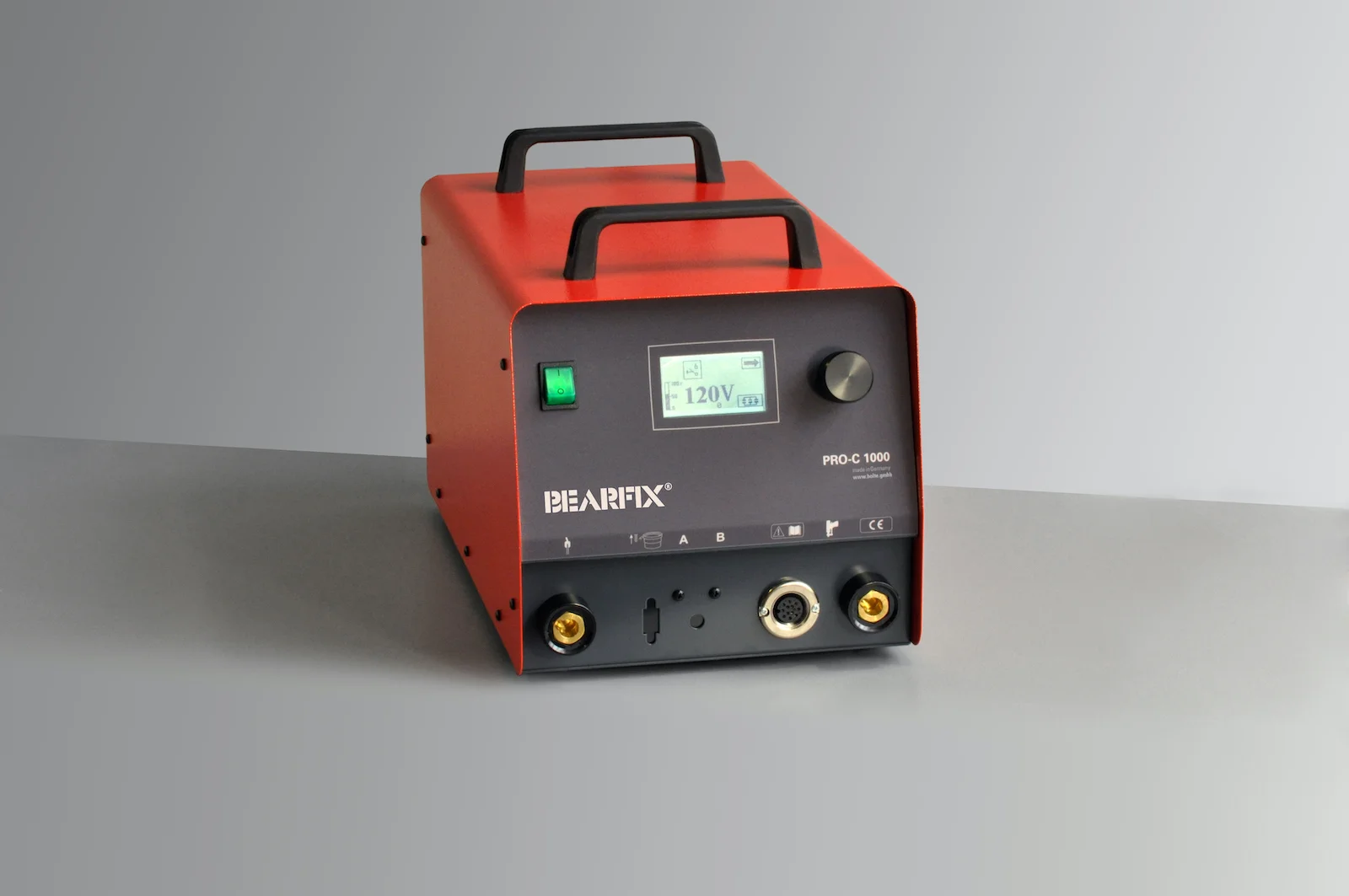
LBSaccu 75 — Portable capacitor discharge
The only unit in the range with a built-in battery (2 × 7.5 Ah / 12 V). It works with no mains connection —around 650 welds per charge for an M6 stud— and can also be plugged into any power outlet. It takes studs up to Ø 8 mm and works on steel and stainless steel. Its weight of 10.4 kg and compact format make it ideal for field installations, maintenance or work at height where carrying a cable is impractical.
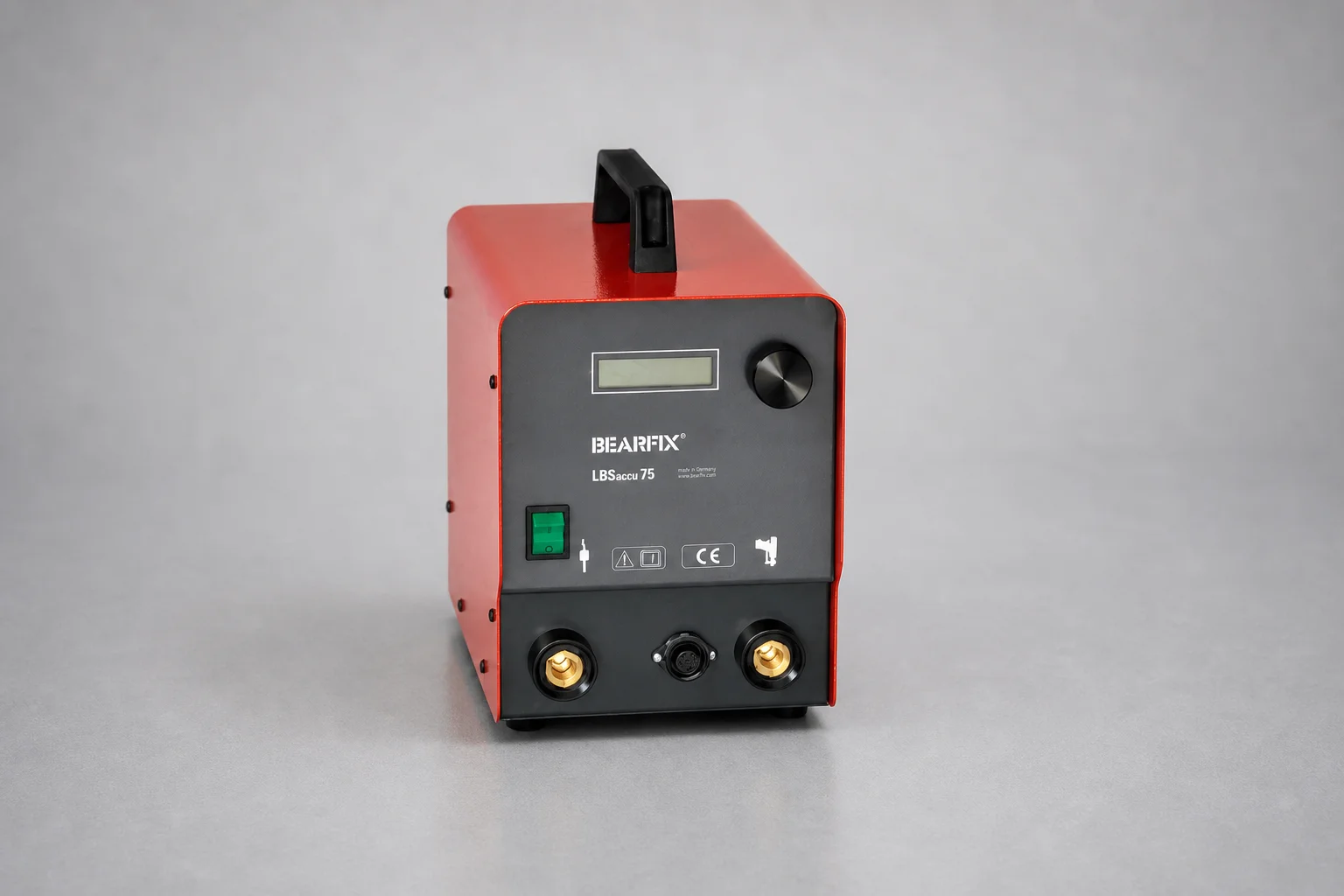
LBH range — Short-cycle arc
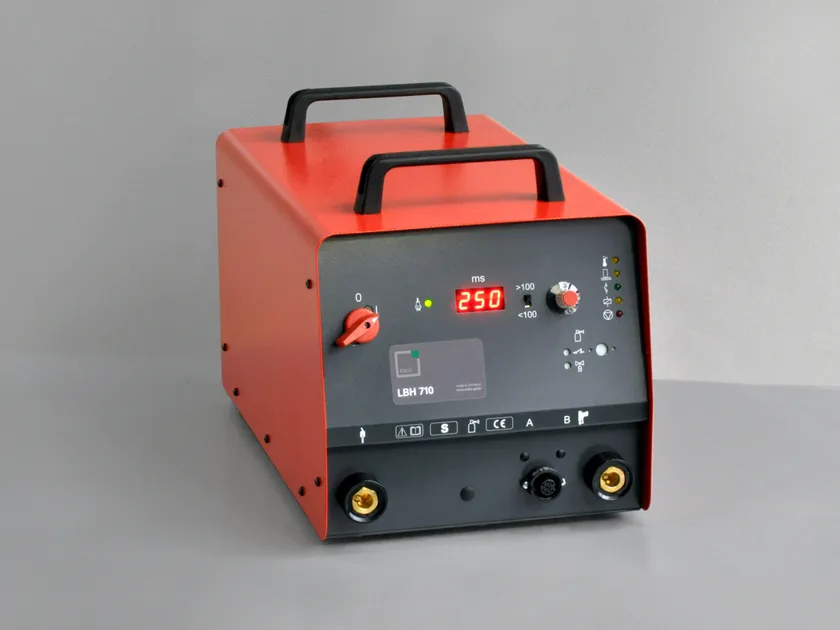
Three models for the short-cycle arc process: the LBH 410 (400 A, Ø 2–8 mm), the LBH 710 (680 A, Ø 2–10 mm, with the option of shielding gas and automatic module) and the LBH 910 (900 A, Ø 2–12 mm). All work on a 400 V three-phase supply. The LBH 710 and LBH 910 also support the ceramic ferrule arc process at the same diameters, which makes them dual-process units when the application requires it.
PRO-S / PRO-I range — Ceramic ferrule inverter arc
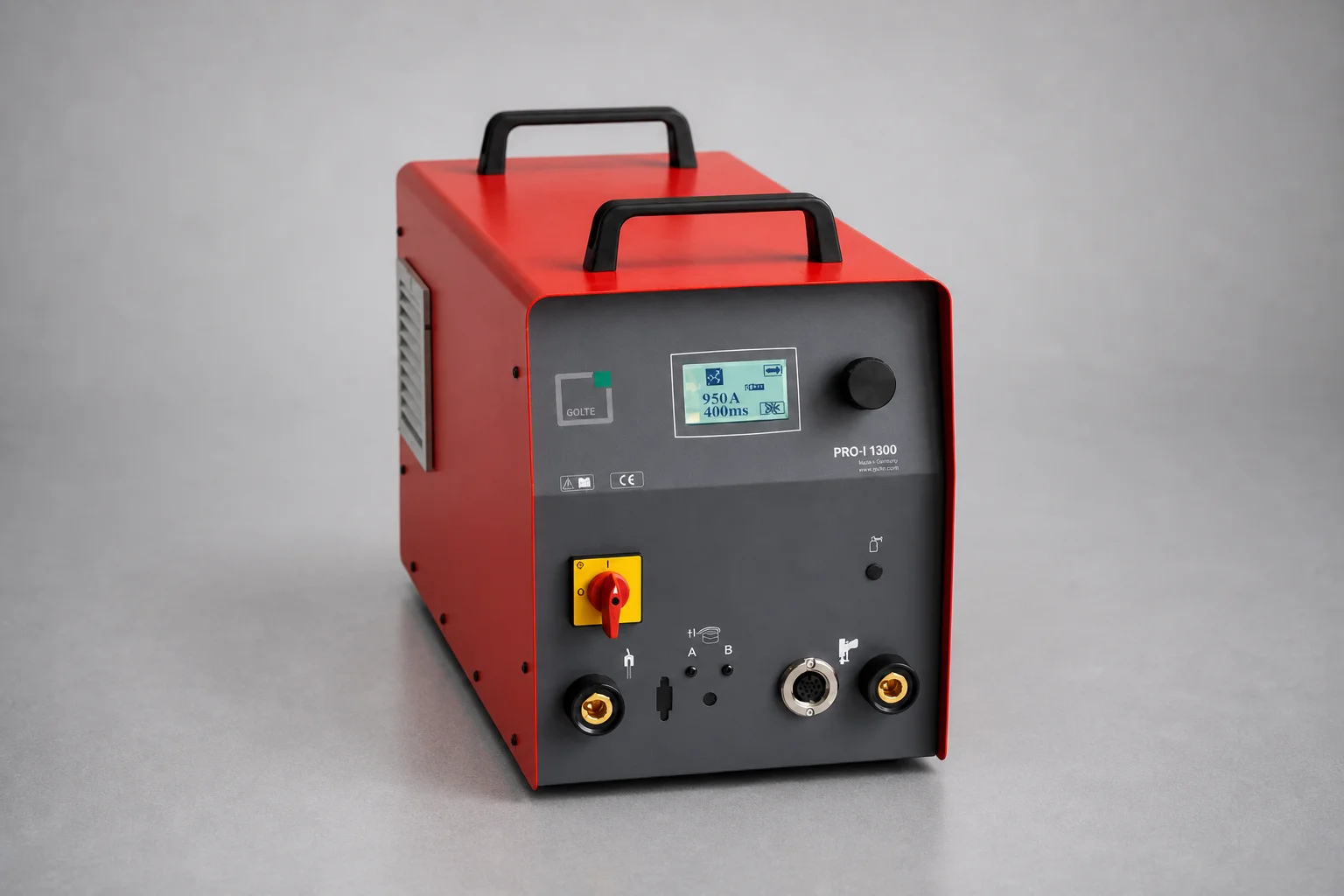
For the largest diameters or installations that need mobility. The PRO-S 600 is the only single-phase unit in this range (230 V), with adjustable current from 100 to 400 A and studs up to Ø 6 mm: a compact 13 kg unit suitable for field and workshop. The three-phase PRO-I 1300, PRO-I 2200 and PRO-I 2800 models scale up to 3,150 A and Ø 25 mm, with a wide supply range (320–495 V) that makes them compatible with generators and long cable runs. The PowerPackage system allows units to be coupled together to exceed 3,150 A combined.
"In applications with high temperature or severe vibration, stud welding is not an alternative to adhesive: in many cases it is the only solution that keeps identification in place for the entire service life of the asset."
Need a stud welder, welding guns or technical service for your equipment?
Ask nowSummary
Stud welding covers the range of applications where adhesive cannot guarantee the permanence of identification: high temperature, vibration, rough or contaminated surfaces, and long-life assets that need the plate renewed without affecting the substrate. The choice of technology comes down to three variables: the stud diameter needed, the substrate thickness and the base material. For Ø 2–10 mm studs on sheet metal —the most common application in industrial identification— capacitor discharge equipment (LBS or PRO-C range) is the first choice. For larger studs or thicker substrates, short-cycle arc (LBH range) or ceramic ferrule inverter arc (PRO-I range) provide the penetration and power needed.
If you need advice on which model best suits your substrate, stud diameter and production volume, tell us the details and we will guide you with no obligation.
Frequently asked questions
When is welding a stud better than applying an adhesive label?
When the surface carries metal dust, oil, cutting grease or extreme roughness — raw castings, hot-rolled structural plate — or when the temperature exceeds what the adhesive can take. The weld is metallurgical and does not depend on how clean the surface is.
How long does the welding process take?
Between 1 and 3 milliseconds on capacitor discharge equipment, and up to 1,500 milliseconds on arc equipment with ceramic ferrules for large-diameter studs.
What temperature do adhesives withstand before a stud is needed?
It depends on the composition: standard rubber-based adhesives fail below 100 °C, conventional acrylics hold between 100 and 150 °C, and special high-temperature adhesives extend that margin significantly.