Lit-Off Desarrollo

Industrial sector

Labels for the food industry

Food labels: withstand cold, washing and humidity throughout the production chain

We supply resistant self-adhesive labels for the food industry: cold rooms and freezing down to −30 °C, high-pressure washing, humidity and condensation, with materials suitable for indirect food contact under EU Regulation 10/2011. A label that lifts, smears or contaminates is a traceability problem, a hygiene problem, and potentially a regulatory one. Since 1994 we have supplied food businesses in Spain and Europe; tell us about your process and we will guide you in choosing the material.

Temperature

−30 °C to +120 °C

Standard

UE 10/2011

Conditions

Cold · Humidity · Washing

Traceability

Batch · Expiry

Main applications

  • Labelling packaging in cold rooms and industrial freezers.
  • Identification of trays and boxes on wet packaging lines.
  • Batch and expiry-date traceability throughout the cold chain.
  • Labels resistant to industrial washing with high-pressure hot water.
  • Labelling of packaging subjected to pasteurisation or sterilisation.
Industrial labels for food and beverages

Common materials in the food industry

  • Polypropylene: resistance to moisture and low temperature. Cold-chain stable adhesive for cold or frosted surfaces.
  • Direct thermal: fast in-line printing for batches, dates and barcodes in cold-chain environments.
  • Polyester: for more demanding conditions: industrial washing, steam, pasteurisation and environments with aggressive detergents.

Do you work in the cold chain or with industrial washing?

Tell us the surface temperature at the point of application, the washing process and the type of packaging. We'll guide you from the first contact.

Consult for the food industry →

Environment and technical requirements

Operating conditions in the food industry

In the food industry, the label faces conditions ranging from extreme cold to humid heat, via surfaces with condensation and aggressive cleaning cycles. The material and adhesive (including cold-chain stable adhesives, which don't lose strength in the cold) must be chosen for each specific point in the production and distribution chain.

Common operating conditions

  • High humidity and condensation in cold rooms and freezer tunnels down to −30 °C. The adhesive must apply and stay bonded on cold or frosted surfaces.
  • Industrial washing cycles with high-pressure hot water and alkaline detergents. The material and print must remain intact after washing. Ask us about validation for your specific process.
  • Thermal processes: pasteurisation, cooking and sterilisation that subject the label to sudden temperature changes and steam.
  • Packaging in HDPE, PP, glass and aluminium foil with different levels of surface energy that determine adhesive choice.

Technical requirements and regulations

  • Compliance with EU Regulation 10/2011 on plastic materials in contact with food: inks and adhesives certified for food environments.
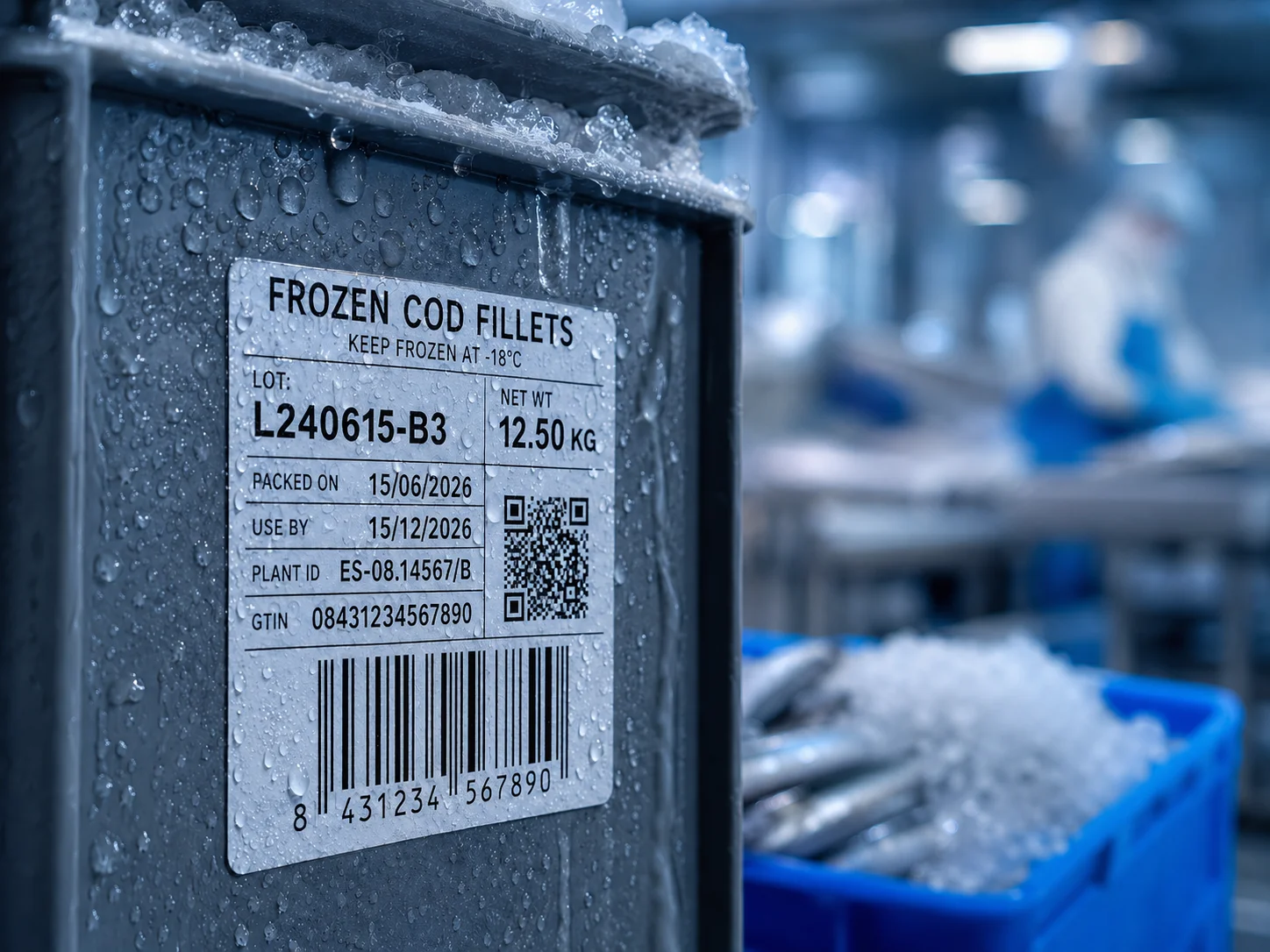
  • Mandatory traceability by batch and expiry date throughout the cold chain: the barcode or QR code must be readable from the factory to the point of sale.
  • HACCP plans may require the label materials to be documented as suitable. We check the specification on a case-by-case basis.
In the food industry, the label accompanies the product through the most demanding environments in the production chain. Choosing the right material and adhesive is as important as the printed content.
Labelling applications in the food sector

Where our labels are used

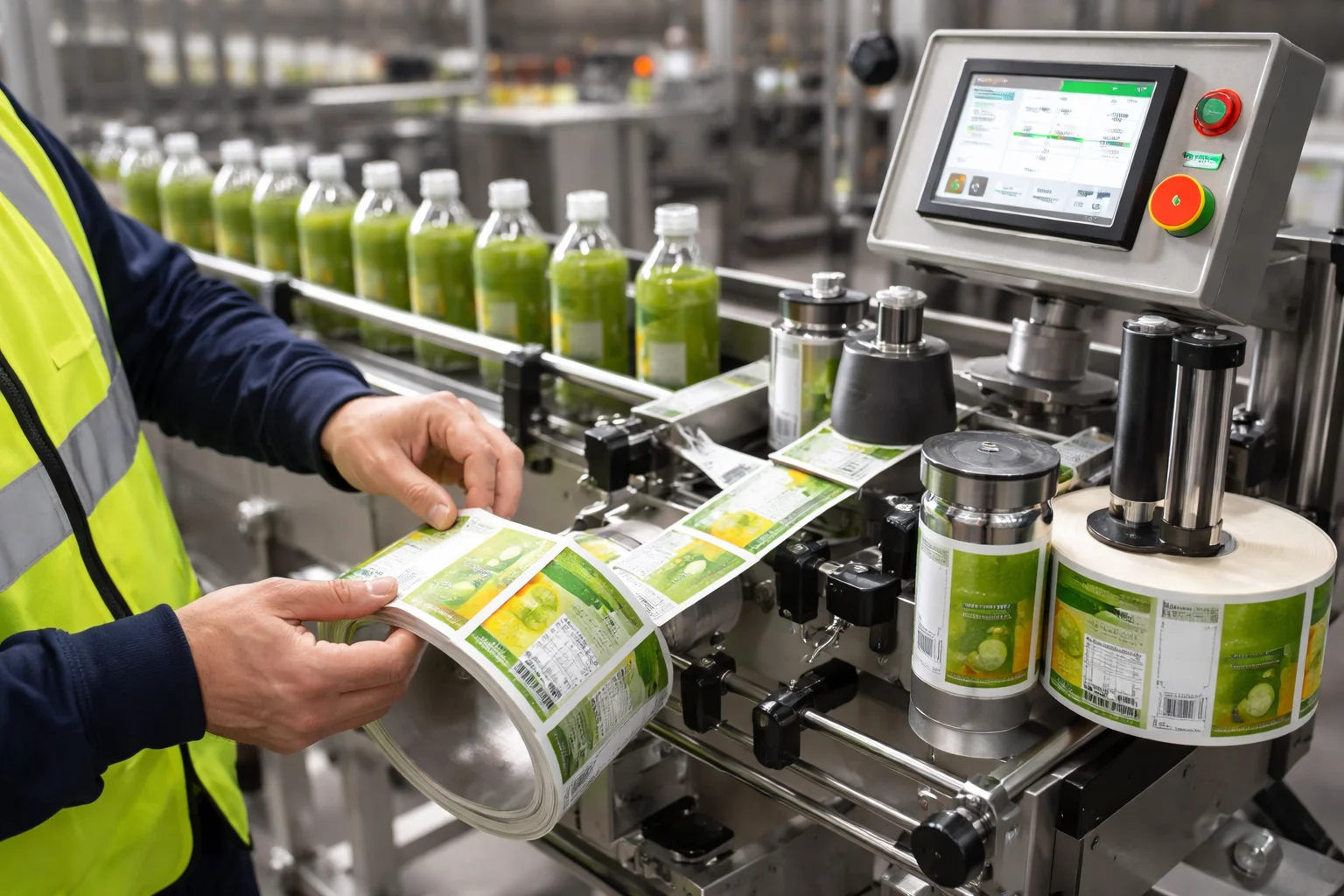
From the batch label coming off the thermal printer on the packaging line to the price label accompanying the product in the supermarket chiller, the material must keep its performance throughout the whole chain.

Specific applications

Where our labels are used

Labelling in the cold chain and cold rooms

Labels applied to packaging in cold rooms or freezing lines face surfaces with condensation and sub-zero temperatures at the point of application. Conventional adhesives don't bond to cold surfaces: adhesives formulated for low temperature are needed.

Polypropylene · Cold-chain stable adhesive · −30 °C

Labels for industrial washing with hot water

Facilities with high-intensity cleaning protocols use high-pressure hot water with alkaline detergents. Permanent identification labels for trays, boxes and equipment must stay adhered and intact after the wash cycle. Ask us about validation for your specific process.

Polyester · Hot-water resistant adhesive

Batch and expiry-date traceability

European food regulations require full batch and expiry-date traceability throughout the chain. Labels printed in-line with thermal transfer or direct thermal printers must produce codes that stay legible in the chiller, during transport and at the point of sale.

Direct thermal · Polypropylene · Barcode · Batch

Packaging subjected to pasteurisation and sterilisation

Packaging that goes through pasteurisation, cooking or sterilisation subjects the label to cycles of high temperature and steam. The adhesive must maintain its bond, and the face material must not warp or lose opacity under these conditions.

Polyester · Steam-resistant adhesive · +120 °C

Recommended materials

Food contact: materials compliant with EU 10/2011

There's no single material for the whole food industry. The choice depends on the point in the chain: a label for a cold room doesn't need the same properties as one for packaging headed to pasteurisation. We guide the selection from the very first contact.

01

Cold chain and humidity

Polypropylene

The most widely used material in the food industry for cold applications and humid environments. Polypropylene is flexible, resistant to moisture, and accepts cold-chain stable adhesives that work even on cold surfaces or surfaces with condensation.

  • Adhesion on cold, wet surfaces: down to −20 °C with standard PP, down to −40 °C with hot-melt adhesive (Ref. RH9).
  • Resistant to moisture and condensation.
  • Compatible with direct thermal and thermal transfer printing.
  • Matt white, gloss or clear.
02

In-line printing

Direct Thermal Batches and expiry dates

For fast in-line printing of batches, expiry dates and barcodes. Direct thermal needs no ribbon: the printer applies heat directly to the label's heat-sensitive surface. Ideal for high volumes and frequent reference changes in cold conditions.

  • Ribbon-free printing: a faster, more economical process.
  • High-legibility barcode and QR printing.
  • Compatible with standard thermal transfer printers.
  • Ideal for batches with high reference turnover.
03

Demanding applications

Polyester Washing and steam

For the most demanding applications in the food industry: industrial washing with hot water and detergents, steam sterilisation and environments in contact with oils or fats. Polyester keeps its material integrity and code legibility when printed with resin ribbon.

  • Resistant to hot water, steam and detergents.
  • Does not warp or lose adhesion under humid heat.
  • Resin ribbon printing: code stays legible after repeated washing.
  • Temperature range: −40 °C to +150 °C.

Sector needs and processes

Common applications in the food industry

In the food industry, labelling doesn't just identify: it must also withstand cold, humidity, washing and regulatory requirements. These are the sector's most common needs.

Application

Labels for the cold chain and humidity

Solutions for packaging, boxes and pallets going through freezer chambers, cold rooms or wet processes. The adhesive must hold its bond on wet, frosted or grease-treated surfaces.

  • Adhesion in the cold from −40 °C up to room temperature.
  • Resistant to splashes, condensation and light washing.

Application

Batch and date traceability

Identification with variable data for batch control, expiry date and internal or GS1 traceability. The code must stay legible through every stage of the process: production, storage and distribution.

  • EAN, GS1-128 or DataMatrix barcode with variable data.
  • Thermal printing compatible with food environments.

Application

Tamper-evident (VOID) labels for packaging

Solutions to guarantee packaging integrity and evidence unauthorised opening. Relevant for high-value products, food supplements, dietetics and any packaging where chain of custody matters.

  • Visible evidence of opening or an attempted removal.
  • Selection based on substrate and the level of security required.

Regulations and sector requirements

Regulations applicable in the food industry

Labelling in the food industry is shaped by food-contact regulations, mandatory traceability and industrial hygiene requirements. Material choice isn't just technical — it has direct regulatory implications.

EU Regulation 10/2011

Food contact

Governs plastic materials intended to come into contact with food, including labels applied to the outside of packaging where migration of substances can occur. The printing inks and adhesives used must be compliant and present no risk of transfer to the food.

  • Applicable to plastic materials in indirect contact.
  • Inks and adhesives certified for food environments.
  • Conformity documentation available.

Food traceability

Mandatory in the EU

Regulation (EC) No 178/2002 establishes mandatory traceability throughout the food chain. The label with barcode, batch and expiry date is the physical record of that traceability: it must stay legible from the factory to the end consumer, regardless of storage or transport conditions.

  • Barcode or QR code readable throughout the chain.
  • Print resistant to the conditions of use.
  • Compatible with GS1 systems and warehouse readers.

HACCP

Industrial hygiene

HACCP plans may require labelling materials present in food areas to be documented and assessed. If your facility requires it, we can advise you on what technical information is available for each material.

  • Ask about the technical documentation available for each material.
  • Guidance on compatibility with common cleaning products.
  • Validation recommended for your specific process and environment.

Frequently asked questions

What customers ask us about the food industry

What label is used in cold rooms and freezers?+

For cold rooms and freezers, materials with adhesives designed to apply and stay in place at low temperature are used: polypropylene with cold-chain stable adhesive for cold surfaces, or polyester for more demanding applications. The key is that the adhesive must not lose bond strength at −20 °C or −30 °C, even when the pack surface has surface condensation.

Do the labels withstand industrial washing with hot water and detergents?+

Yes, with the right material. Food facilities with high-pressure washing cycles using alkaline detergents require polyester or polypropylene labels with high-performance adhesives that keep the label adhered and the code legible. Talk to us about validating your specific process. A standard adhesive lifts, or the print smears, under these conditions.

What regulation governs indirect food contact for labels?+

EU Regulation 10/2011 governs plastic materials in contact with food, including labels applied to the outside of packaging where migration can occur. In practice, this mainly affects inks and adhesives: they must be compliant for food environments and must not contaminate the product.

Can you supply labels for wet or frosted surfaces?+

Yes. Wet or frosted surfaces are one of the most common challenges in the food industry. There are specific adhesives formulated to bond even to surfaces with surface condensation. Tell us the surface temperature at the point of application, the type of packaging, and whether there are subsequent freeze/thaw cycles, so we can guide you to the right choice.

Which label is suitable for batch and expiry-date traceability?+

It depends on the printing process. If printed in-line at the factory with a thermal transfer or direct thermal printer, the most common materials are direct thermal for fast batch labelling in cold conditions, or polypropylene for applications demanding more durability. The barcode or QR code must be readable throughout the chain: from the factory to the checkout at the point of sale.

Can you send a sample before production?+

Yes. In the food industry, where conditions of use can include extreme humidity, washing or low temperatures, validating the material with a sample before production is necessary. Tell us the type of packaging, the application surface, the temperature and the washing process, and we'll prepare a sample tailored to your application.

What is the service life of a label in a freezer chamber at −30 °C?+

Service life depends on the adhesive and the substrate. With polypropylene and permanent acrylic adhesive, a label keeps its adhesion and legibility for months in a chamber at −30 °C. For prolonged freezing or in-and-out cycles, we confirm this with a real-world test before production.
Contact

Need labels for the food industry?

Tell us the type of packaging, the application temperature, the washing process and any regulatory requirement. We'll guide you in choosing the material from the first contact.

  • Technical advice with no obligation.
  • Response within 24 hours.
  • Material samples for prior validation.
  • Materials compliant with EU 10/2011.
Please enter your company name.
Please enter your name.
Enter a valid email address.
Please write your message.
You must accept the privacy policy to continue.